Fishing Charters Tampa Bay
Fishing Charters Tampa Bay
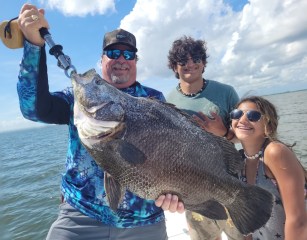
Fall is finally here! It is an exciting felling when you just wake up and you can hear the trees and the wind blow at times as the seasons begin to change and the weather pattern starts breaking. As we move on from what it feels like an endless summer at times due to high heat and humidity we receive down here in Tampa Bay, we welcome Fall with arms wide open to sigh a breathe of fresh air as we get read on our Tampa Fishing Charters. Even though summer is a great time of year fish and there are such a wide variety of fish to be caught during the hot days such as Mangrove Snapper, Spanish Mackerel, Sharks, Tarpon, Triple Tail, Redfish, Snook, Flounder, Cobia, Black Drum, Speckled Sea Trout and Gag Grouper, we start to switch gears and start to target the three main slam species of Tampa Bay, which are Redfish, Snook, and Speckle Sea Trout. When we start targeting mainly these three species, it does not mean the others do no exist, it is because simply when the weather starts breaking, we start to get more of a breezy weather pattern for this time of year as our yearly cold fronts start making their way through our Southwest Region, which makes fishing for the other fish that tend to hang out in more open Bay areas less desirable due to choppy water conditions a majority of the time. However, when the windy patterns do give us break from time to time you will definitely find us during the Fishing Charter targeting those other species until the water temperature starts to drop below 65 degrees. At that time when the water gets to chilly, we will adjust our efforts on going for certain species that do not mind the colder water, such as Sheepshead, Redfish, and Trout. I expect this fall and winter season to be spectacular due to the El Nino weather pattern we are receiving throughout the end of the year. This type of pattern which consists more of rainy pattern tends to gather the fish more into our back country creeks and marsh ponds where they will pretty much settle until it gets warm again during Spring time.
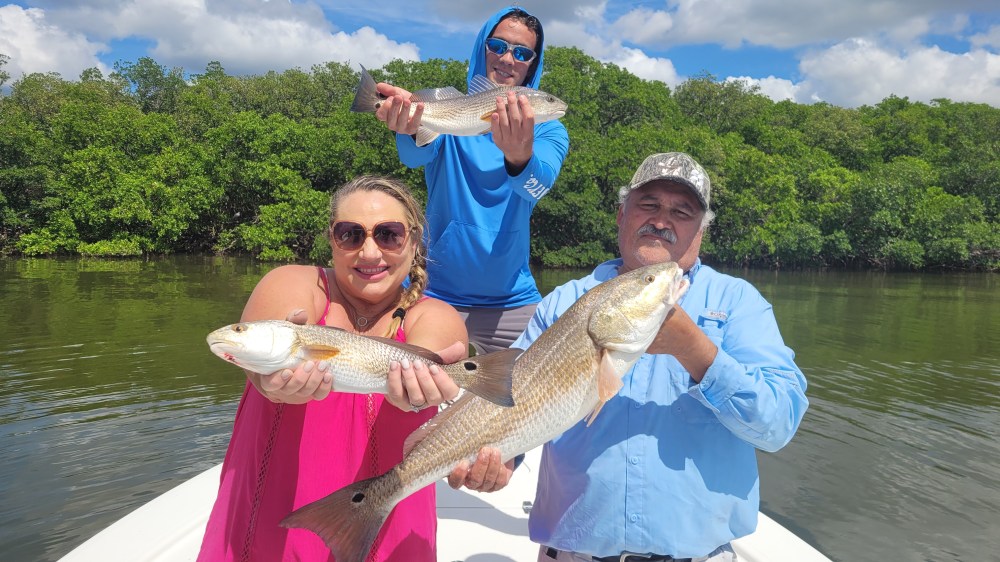
What is Biting on our Tampa Fishing Charters
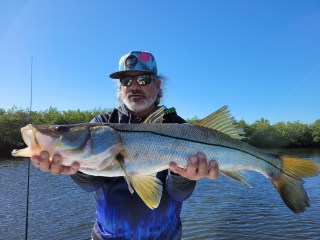
Fishing has been excellent currently because of the change of the weather patterns. The water is starting to cool off, after a blistering hot summer we just went through. When water temperatures start to decline this turns on the bite pretty good. It almost seems like the fish have a sensor inside them alerting them that seasons are changing and it is time to fill up before winter time approaches, in which the bait starts to get more scarce and fish become more lethargic depending on what species you are targeting. During our Fishing Charters Near Me, we have already shifted on catching the three prime suspects, Snook, Redfish, and Trout. Occasionally you will catch other species in between such as Ladyfish, Catfish, Jack Crevalle, Tarpon, and Sharks, but we will be targeting just the Slam Category. We have been fishing mainly Creeks adjacent to Flats, and also deep water canals or Channels depending on what the tide is doing for the day. Areas such as the south shore of Tampa Bay, like Port Manatee, Ft. Desoto, and Sarasota Area are great areas to target for this time of year. We also like to focus on upper parts of Tampa Bay like Picnic Island, Hillsborough River, Weedon Island and the flats near Hula Bay. These hotspots are great for this time year due to amount of bait that is swimming around on the flats and near the sandy shorelines. The Bait known as Pilchards, will be hanging around until the water temperatures really start to plummet. You can easily catch bait right now, simply by just looking for the birds diving, like as Pelicans, Sea Gulls, and Turns. They like to give out the location easily when searching for bait. Once you locate the birds diving, approach the area and settle up in about 2 to 3 feet water column and start chumming up the bail using Fish Food you buy at the Feed Depots through out town. As you are chumming you will start to see bait skip on top of the water or may see it just milling through your chum slick that you created by chumming. Once visible signs of bait is seen, load your preferred cast net up, and throw the net just down current of your chum line to gather your bait up. My preference in cast nets for this time of year is the called the Drop Out Cast Net. I like the 10 foot 1/4 inch mesh size 1.4 lbs per foot. This gives me just a big enough mesh size to catch the small bait still prowling around on the flats while the weight in the net allows me to throw it into deeper water for larger baits if needed around the Bridges and deep water Channels. Another Tip on catching bait on the Flats is to find the sandy holes near the grass. The bait likes to hang out on the edges of these holes in case it needs to push out onto the grass to flee from any predatory fish hanging around.
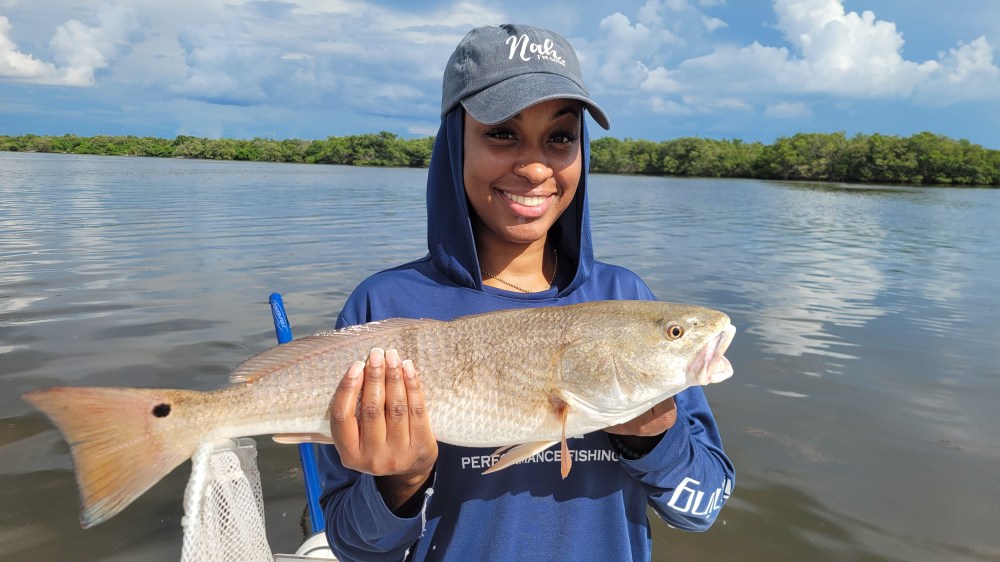
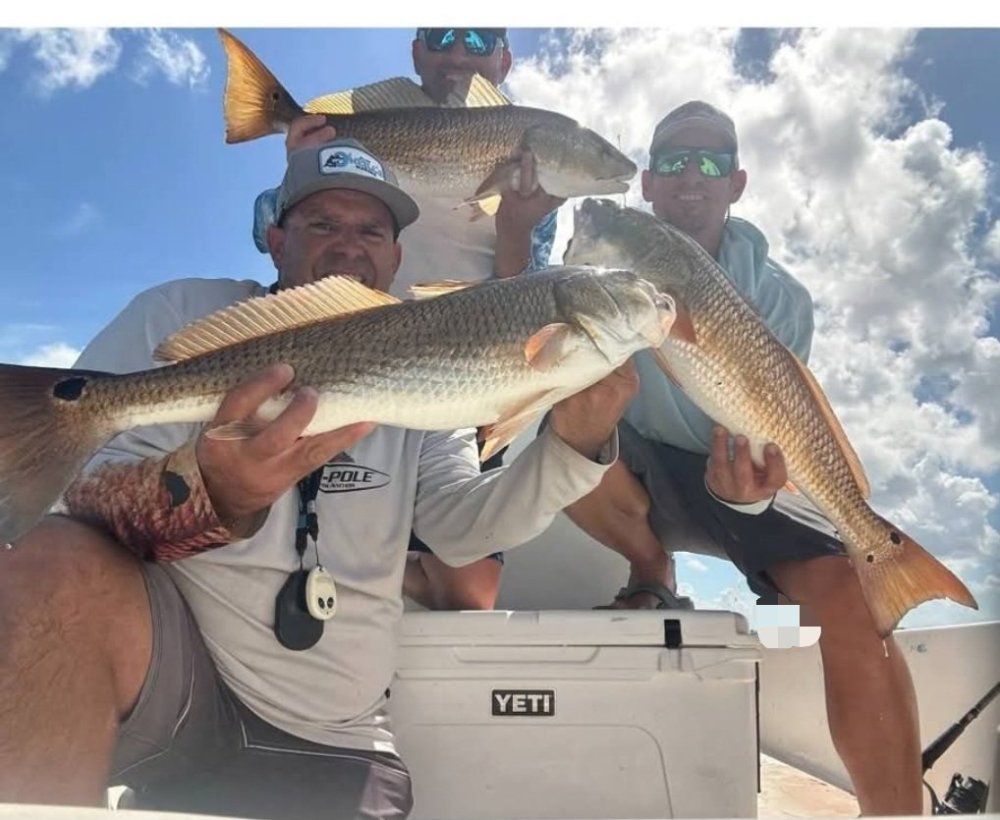
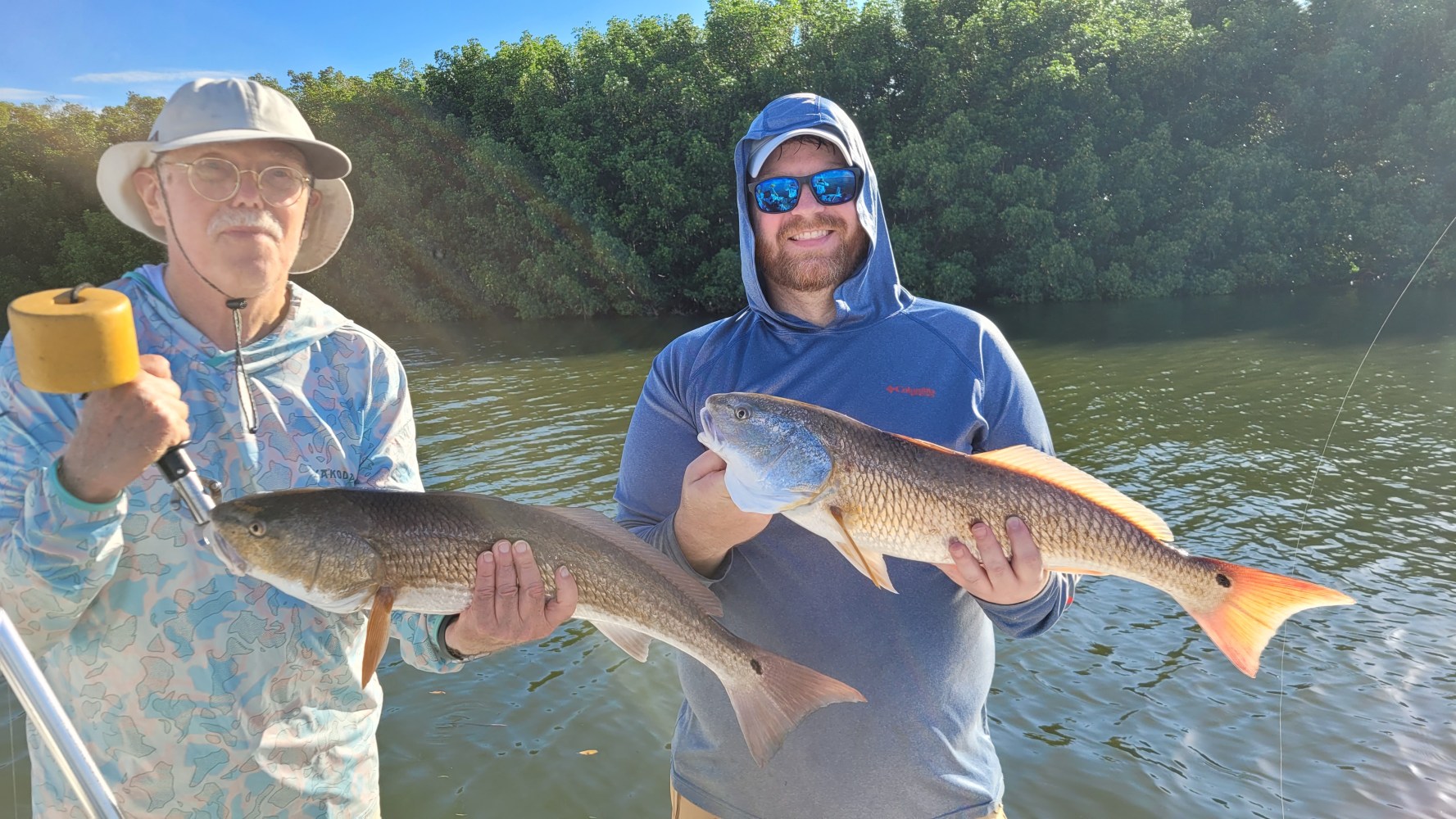 On our Tampa Bay Fishing Charters trips, it offers excellent opportunities for inshore anglers targeting redfish. From shallow seagrass flats to mangrove shorelines and oyster bars, the bay provides a variety of habitats where redfish feed and travel throughout the year.
The key to locating redfish is understanding their environment. Instead of fishing random areas and hoping for a bite, anglers can improve their chances by learning to read the tides, identify productive structure, recognize feeding activity, and adjust their approach to changing conditions.
Whether you fish from a boat, kayak, or the shoreline, this guide will help you understand where to look for redfish in Tampa Bay and how to find them more consistently.
Look for Redfish on Shallow Grass Flats
Seagrass flats are among the most productive areas to investigate when searching for redfish. These shallow environments provide food, cover, and access to small crabs, shrimp, and baitfish. Redfish often move across grass flats while searching for food, particularly where seagrass meets sandy potholes or slightly deeper water. Here is what to look for when approaching the flats. Patches of darker seagrass separated by sandy bottom. Small depressions or potholes within the grass. Baitfish flickering or scattering near the surface. Subtle wakes moving across shallow water. Redfish tails breaking the surface as fish feed. When fishing a grass flat, move slowly and scan the water ahead of you. Polarized sunglasses help reduce surface glare and make it easier to distinguish fish, bottom features, and underwater vegetation. Areas around Weedon Island and Terra Ceia Bay are worth exploring for this type of habitat.
Target Mangrove Shorelines
Mangrove shorelines provide shade, shelter, and feeding opportunities. Redfish frequently patrol these edges, looking for shrimp, crabs, and small baitfish moving along the roots. Focus on points, small cuts, pockets, and places where mangroves meet shallow grass flats. When fishing from a boat or kayak, approach quietly and make controlled casts along the shoreline. A soft-plastic shrimp, weedless artificial lure, or live shrimp can be effective. Pay particular attention to shoreline sections with moving water. Tidal currents can carry food past mangrove roots and create natural feeding opportunities. Cockroach Bay and the mangrove-lined shorelines around Weedon Island are examples of Tampa Bay areas where anglers can investigate this type of habitat.
Find Oyster Bars and Shell Bottom
Oyster bars are another important feature to look for when locating redfish. These areas support small crabs and other prey, making them natural feeding grounds. Rather than concentrating only on the middle of an oyster bar, investigate its edges and the transitions between shell, grass, and sand. A falling tide can expose shallow structure and concentrate bait moving toward deeper water. However, redfish may also feed along oyster-bar edges on an incoming tide, depending on water depth and local conditions. Here is a a Fishing Tip, Use a map or chart to identify oyster-bar edges before arriving such as Google Earth. Approach carefully, since submerged shell can damage a boat or injure someone wading.
Learn How Tides Affect Redfish Location
- Tides are one of the most useful clues for locating redfish in Tampa Bay. The changing water level affects which feeding areas fish can access and where bait becomes concentrated. As the water rises, redfish may move onto shallow flats and closer to mangrove shorelines that were too shallow to access earlier. Here is what to look for, during this time. Fish moving across newly flooded grass flats, mangrove points with current, shallow potholes connected to deeper water, baitfish moving toward the shoreline. As water falls, redfish may leave shallow feeding areas and move toward deeper edges, creek mouths, and channels. You can look for, current flowing off a flat, small channels draining shallow areas, bait moving through creek mouths, deeper pockets adjacent to shallow grass. During times of slack tide which is, when tidal movement slows, feeding activity can change. Fish may remain in likely holding areas, but the lack of current can make some locations less productive. Consider moving to a different depth or structure if activity slows. An important tip is, there is no single tide that guarantees redfish. Water depth, wind, season, water clarity, and bait availability all influence where fish feed. Check a tide prediction for the specific part of Tampa Bay you plan to fish.
Recognize Signs That Redfish Are Feeding
Learning how to recognize fish activity can help you distinguish productive water from an area that simply looks promising, such as a tailing Redfish. A redfish feeding in very shallow water may lower its head toward the bottom and raise its tail above the surface. This is one of the clearest signs that a fish is feeding. Look also for surface wakes, or what I like to call chunky water. A moving redfish can push a visible wake through shallow water, even when the fish itself is difficult to see. Look for wakes that move independently of the wind and current. You can look for nervous bait as well, which is when small baitfish may suddenly scatter, ripple, or leap when larger fish approach. Birds diving or feeding over bait can also provide clues, although they do not necessarily indicate redfish. When patrolling a flat if you notice or see muddy patches, this can indicate redfish feeding along the bottom which disturb sediment and create small clouds of mud. Fresh disturbances on otherwise clear flats are worth investigating. Keep an eye out for stingrays searching the bottom, they can stir up crabs and other prey. Redfish sometimes follow them to take advantage of disturbed food. When you notice any of these signs, slow down and observe before casting.
Explore Productive Redfish Areas Around Tampa Bay
Tampa Bay is a large estuary, so it helps to break your search into smaller areas rather than trying to cover the entire bay in one trip. Here is some fishy locations worth taking the time to check over if your on the hunt for redfish.
Weedon Island
Weedon Island offers mangrove shorelines, shallow grass flats, and areas of varied bottom structure. Investigate accessible shorelines and flat edges, paying attention to water depth and tidal movement.
Cockroach Bay
Cockroach Bay is worth exploring for shallow water habitat, oyster bars, and mangrove lined areas. Its shallow bottom makes careful navigation and tide planning especially important.
Terra Ceia Bay
Terra Ceia Bay features shallow flats and protected shoreline habitat. Look for transitions between grass, sand, and deeper water, particularly where baitfish are present.
Fort De Soto
The Fort De Soto area provides access to a variety of coastal habitats, including shallow flats and mangrove edges. Focus on areas where current, bait, and suitable bottom structure come together.
Upper Tampa Bay
The upper bay offers a mix of tidal creeks, mangroves, and shallow shoreline habitat. Explore accessible fishing areas and look for creek mouths and depth changes.
These are starting points, not guaranteed fishing spots. Redfish move with environmental conditions, and the most productive location can change from one trip to the next.
Adjust Your Search to the Season
Redfish can be caught in Tampa Bay throughout the year, but their distribution and feeding behavior change with water temperature and other conditions. During fall, cooling water and seasonal baitfish movements can create excellent opportunities. Look for schooling fish, active bait, and feeding activity on shallow flats. On our Fishing Charters during winter during the colder periods, investigate deeper edges, protected creeks, and areas adjacent to shallow feeding flats. Fish may move into shallower water when conditions improve. When spring arrives, focus on grass flats, oyster bar edges, and mangrove shorelines as water temperatures rise and feeding activity changes. As the hotter months arrives during summer, early mornings can provide comfortable conditions and productive shallow water fishing. During hotter periods, investigate shaded shorelines and nearby deeper water. These are general seasonal patterns, not fixed rules. Local weather and water temperature should guide your decisions when you plan out your next fishing adventure.
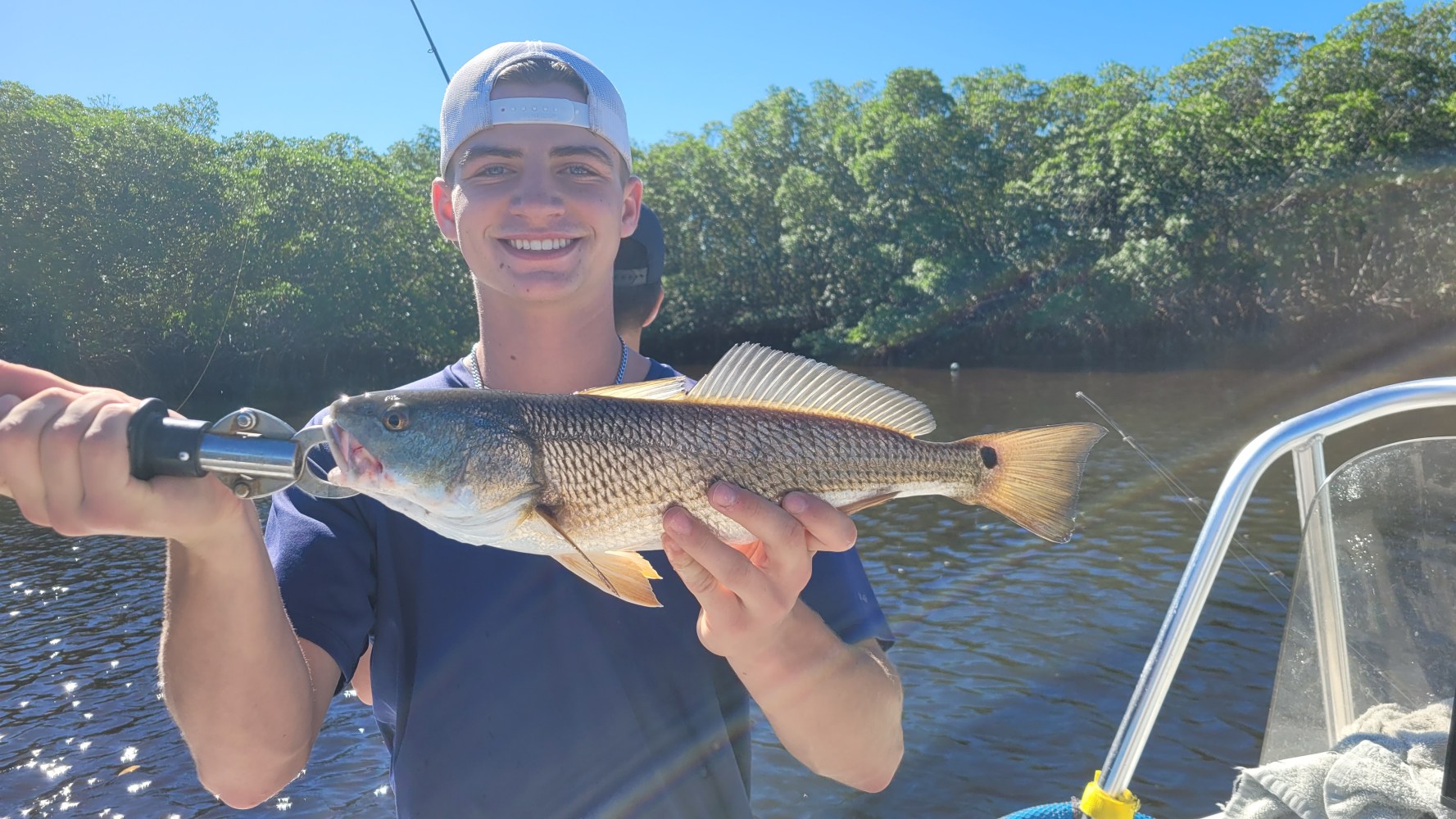
Use the Right Gear to and Catch Redfish
You do not need a complex setup to begin targeting redfish. A medium or medium-heavy inshore spinning outfit, suitable braided line with a leader, and a selection of artificial or natural baits will cover many situations. You may consider carrying some of these items in your arsenal when targeting redfish. Gold or weedless spoons, which is useful for covering grass flats. Soft plastic shrimp are effective around mangroves, potholes, and other structure. Soft plastic paddle tails, which is my favorite and useful for searching open flats and drop offs. Live shrimp, a very versatile natural bait for many inshore situations. Polarized sunglasses, is a must and helpful for spotting fish and reading shallow water. A measuring device, an important for checking legal fish size. Match the lure weight to the water depth and current. In shallow grass, a lure that moves naturally without constantly snagging vegetation can make fishing more efficient.
A Simple Plan for Finding Redfish on Your Next Trip
If you are unfamiliar with an area, use a repeatable approach. Check the tide prediction, weather, wind, and recent conditions. Choose a shallow flat, mangrove edge, or oyster bar system with safe and legal access. You can also, observe the water before making your first cast. Look for baitfish, wakes, tails, and changes in bottom structure. Fish the edges of grass, sand potholes, oyster bars, and channels rather than casting randomly across featureless water. If you see no signs of life after methodically covering an area, change your position, depth, or habitat. Record the tide stage, water depth, weather, and location where you encounter fish. Over time, these observations can help you identify patterns. The goal is to develop a repeatable process for finding fish, not to depend on one secret location. Healthy habitats help support Tampa Bay’s redfish fishery. Avoid damaging seagrass beds, disturbing wildlife, or running a boat through water that is too shallow. Handle fish carefully, minimize time out of the water, and release fish promptly when appropriate. Before keeping a redfish, consult the current Florida Fish and Wildlife Conservation Commission regulations for the Tampa Bay management region. Regulations can change, so verify the current slot limit, bag limit, and any special rules before your trip.
Locating redfish in Tampa Bay becomes easier when you learn to read the water. Grass flats, mangrove shorelines, oyster bars, tidal creek mouths, and depth transitions all provide useful clues. Pay attention to the tide, search for bait and feeding activity, move quietly, and adjust your approach as conditions change. By combining habitat knowledge with careful observation, you can spend less time fishing unproductive water and more time targeting areas that offer real potential. Whether you fish from shore, a kayak, or a boat, the most important skill is learning why redfish use a particular area and when conditions make it productive.
As a fulltime Fishing Guide Tampa Bay, we pride ourselves to give you the best chance possible on your landing the catch of your dreams. We carter to all ages, and from novice to very experience fisherman of all sorts. Give us a shout and book a trip, if we can be of any assistance on helping you make memories for you and the family. Tight lines.