Fishing Charters Tampa
What to Expect on a Fishing Charter Near Me in Tampa
If you enjoy the outdoors, rather it be fishing, hunting, hiking, or even relaxing and like to travel a lot to unknown areas, but not sure on where to start? In this blog we will cover exactly on what to expect when booking a Fishing Charter with us by providing a full walk through, followed by other things to do in Florida along with a Fishing Report on what’s biting lately in Tampa Bay.
Being an outdoor enthusiast, we like to enjoy most of our time outdoors and in this specific example we like to fish a lot. We do not only fish our local areas such as Tampa Bay, but also like to travel to different parts of the State to enjoy various techniques catching all kinds of different species that fishing overall can offer. However, when travelling to different areas to seek out bucket list species, it can be quite frustrating on where to begin your journey. This is why it is not uncommon to hire a Fishing Charter in that unique area, so this way you are cutting out a lot of time and money on searching for that prize catch. On our Fishing Charters Tampa, we fish out of Black Jack center Console Bay Boat 224, which is a very versatile boat that can get you to where you need to be for pretty much all species Tampa Bay has to offer. This list is includes, Tarpon, Redfish, Snook, Speckle Trout, Flounder, Snapper, Grouper, Sea Bass, Pompano, and Sharks just to name a few. When hiring a Fishing Charter, our day as a captain pretty much begins the night before. During this time frame we develop a game plan based off the tides and weather that we will be dealing with for our trip. Once thus has been determined our next step and starting to choose which Rods and Reels will be best for out target species. When choosing Rods and Reels for fishing, there is a lot of things to keep in mind, such as how big of a species you plan on targeting? Will you be fishing skinnier water for sight casting Redfish on the flats? Are there going to be any Reefs or deep water edges you plan on fishing? These basic questions to your self will help you determine the appropriate setup to rig up in preparation for your fishing day. For Example if targeting Tarpon, Black Drum, or Sharks you may want to go with a heavier setup than you would use on a slot Redfish on the flats. A setup with a 8 Foot heavy rod with a 50lb line class paired with a Penn Slammer 4 6500 would be a good outfit on bigger fish. However when targeting Redfish on the flat a more forgiving setup such as a 7’6 medium rod paired with a 3000 Penn Battle will be more comfortable for you to use when stalking these tailing fish on the flats.
Once we have decided on what species to target with the information given on the tides and weather for the day, We then wakeup the day of the trip around 4 A.M in the morning loading the boat and connecting the truck to the trailer and head out to the boat ramp that was previously discussed over the phone for pickup. The reason why we get up so early is to catch bait for our Tampa Fishing Charter. We like to catch what we call Pilchards also known as “white bait” in the Bridge lights early in the morning. Typically at night time the bait fish are attracted to these lights shining down in the water. This gives you a very good chance on throwing your cast net on top of them in order to fill up your live well. There are times where the at night technique does not work and the bait is no where to be find. When this happens there are nearby flats where you can chum up bait fish which include pilchards, Pinfish, and thread fins to your boat and then cast netting them for the day. When chumming up bait fish on the flats you will need Tropicana Fish Chum, in which you can buy at feed depots locally, along with a cast net of your choosing. When Choosing the right Cast net, you will have to decide on which type to throw, rather it be a heavier cast net or a lighter one, such as a 3/4 inch versus a 1/4 inch stretch. When targeting larger profile baits around the bridges, a heavier with 3/4 inch stretch is commonly used to get the net down faster to the bait since it will be hanging out in deeper water. While, throwing a lighter cast net with 1/4 inch stretch is more practical for the flats since the water will not be as deep and the bait will be smaller in size.
Once we have secured our bait for our Fishing Charter Tampa, we will then meet you at the boat ramp to pick you up and start our fishing adventure. When determining our Fishing Spots on Tampa Bay, it all goes back to the preparation we had completed the night before based of the tides and weather. Typically, if it is higher tide we will start in the Back Country of numerous mangroves lines, Flats and creek systems that Tampa Bay has to offer. These are the areas Redfish, Snook, Trout, and Tarpon call home year round for us. The reason on going to these back country spots first, is because the high tide that we were delt with will allow us to travel to these areas by boat, where later on when the water drops during low tide we will not be able to fish these areas due to the water level being low. As the water drops out of Tampa Bay, we will move to find fishable water so that we do not get stuck in the Creeks and or the Flats. Areas such as bridges or even some of the local reefs we have here in Tampa bay provide great fishing action and include species such as, Sheepshead, Snapper, Grouper, Flounder, Sharks, and Spanish Mackerel.
As the day concludes and the time duration runs out, we will then make our way back to the boat ramp for drop off and to clean any fish we may have kept for the day that were within fishing regulations for you. We will bag your fish so that way you can travel back with them to the location you were staying at or even to a restaurant whom may cook you fresh catch of the day. Once we get back home we then clean our boats and tackle, then send you cany photos we may have taken for those long lasting fishing memories.
In conclusion, as you can see there is a lot of time and dedication put in when you are hiring a full time Fishing Guide Tampa Bay. Not only are you cutting out time to explore on your own or even spending a lot of money on bait and fishing tackle in hopes of catching a fish, we do all the work for you by providing all the requiring licenses, fishing tackle, providing fresh caught bait, and sharing with you tons of fishing knowledge that we have built up over the years, this takes the guessing game out for you, so that way all you have to do is wake up, hop on the boat, and enjoy your day on making memories with the family or friends.
Things included on your Fishing Charter:
Fishing tackle, rods and reels, bait
Fishing Licenses
Fishing Knowledge
Cooler with ice and water
Fish cleaned and packaged
Good time!
Things not included on you Fishing Charter and is recommended on bringing:
Hats
Sunglasses
Sunblock ( not the spray on kind)
Lunch and anything else besides water to drink
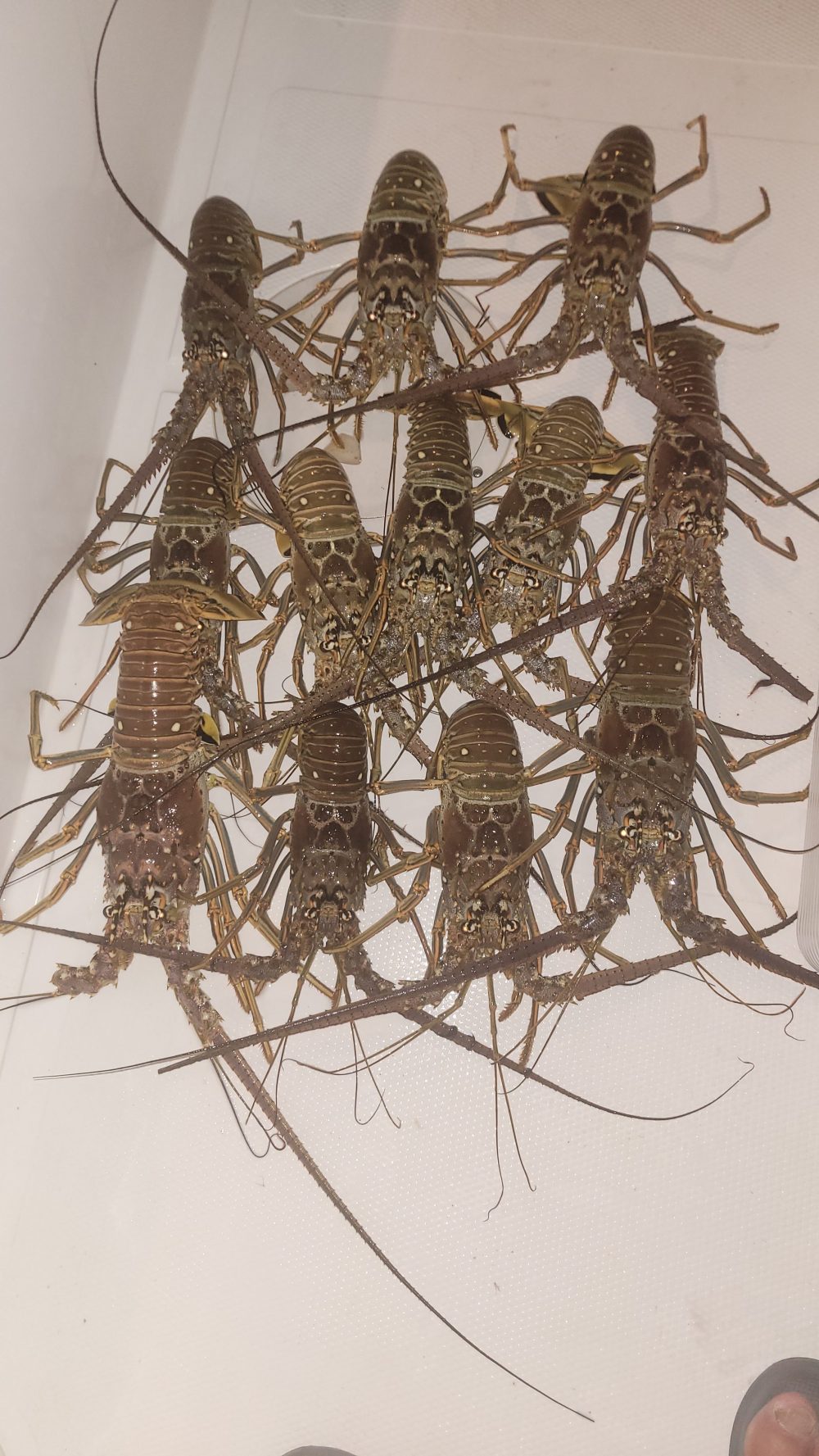
Lobster Season
Florida is a unique and diverse area to fish, that provides you with many of species to target. Yes, a lot of people travel down here to target your normal culprits such as Trout, Snook, Redfish, and Tarpon however during the late summer months Florida is also know for its lobstering. Catching these Spiny lobsters are fun and gives you a break from the hot and muggy days since you will be in the water enjoying on catching these bugs.
People like to travel down to areas like Miami and The Florida Keys in search of the Spiney Lobster. There are different techniques you can enjoy when in search of these bugs and location is key as to which technique you plan on using. Some of the techniques include Bully Netting, Snorkeling, and Diving. People call Spiney Lobster bugs, because they are like roaches hiding under rocks, ledges, and channels. When searching for them in the water they will have their heads out of the structure at time but mostly all you will see are their antennas sticking out which replicate a roach. When going under the water in search for them if you see a ledge or coral head these tasty critters will hide in those ledges or under the coral heads as they seek shelter from larger predators that like to eat them. You can catch Spiney Lobsters with a net and a tickle stick which is a long rod that you shove under the structure or ledge and you slide the lobster out of its hiding spot in order to net him from behind. It is a really fun experience in which I believe everyone should try at least once. The other technique people use is called Bully Netting. It is a popular thing to do at night due to lobster like come out of the ledges, channels, and onto the flats at night in order to eat. So finding a deep channel adjacent to a flat, or a flat that is near shallow ledges are great starting points when trying you hand at bully netting. You will of course need to have a bully net along with a light system rigged on your boat. When choosing the light system it is imperative you find one that gives you great visibility range of 180 degrees on the bow of your boat. This gives you a good spread of light that shines under water up to 5 to 7 yards in front of you when patrolling the flats looking for the lobster crawl on. Once locating a lobster you take your bully net and go straight down on the lobster aiming for the rim of the net to touch their antennas. When doing so correctly the lobster feels that impact and makes them go backwards into you net in which you will then pull straight up out of the water. Never go at an angle because the lobster will always find a away to jump out of your net. When free diving for Spiney Lobster are you need is a pair of goggles, Snorkel, and long fins to help you get down into the current. You will also need to display a diver flag from your vessel so that way it communicates to boat traffic that there are people in the water and to take caution. If free diving is not your thing they do make items such as “third lungs” which are contraptions made with an oxygen tank with hoses connected to it that allows multiple people to share and gives you the opportunity to stay down in the water without coming up with air every time you go down.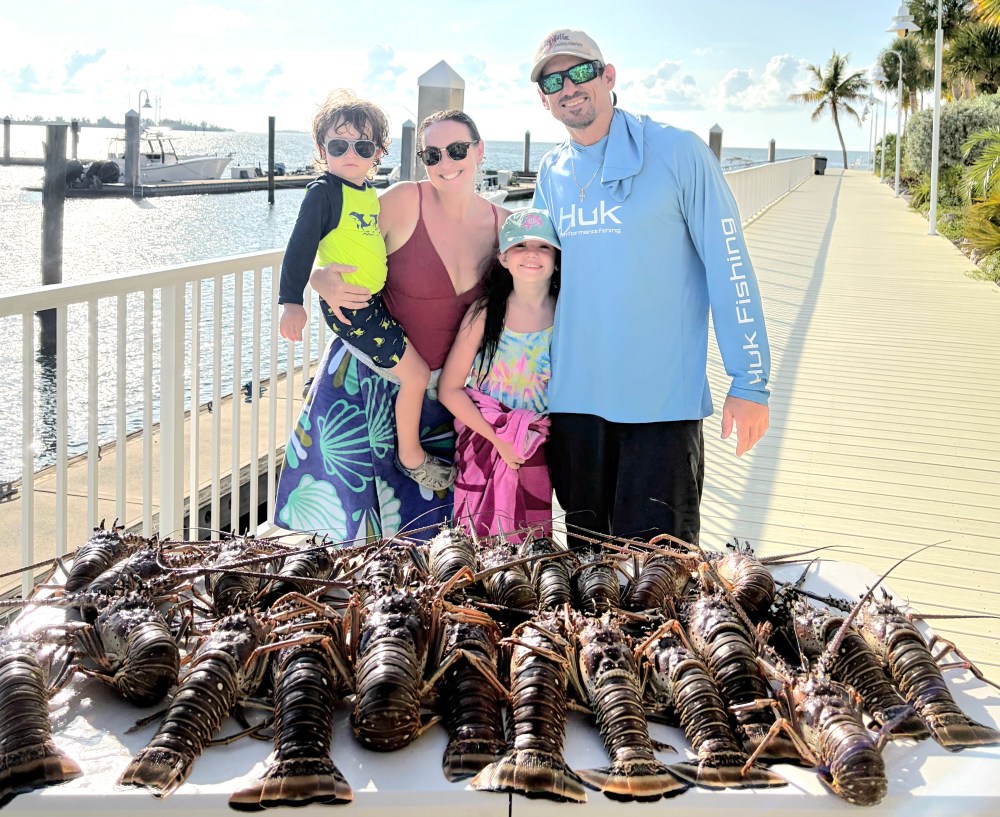
Just like with fishing finding Lobsters can be difficult at times and it is best to always do you home work before going out to hit your spots on opening day or even Mini Season. Mini Season and opening day will produce the most amount of legal size lobsters since after these days the resources start to get more scarce and more time is needed to find a legal size lobster. With that being said it is always a good idea to develop a game plan the day before or even scout before these days occur to maximize your lobster experience. Some things you can do , just like fishing, is look at Google Earth prior before your trip and look for key areas such has deep channels adjacent to flats, Passes and Bridges. Once you have determined these areas based off the map, go enjoy a day scouting the areas by either free diving or even drag a few people off the stern of your boat with a rope that goes at least 30 yards back driving up down and marking the ledges your spot or even when you see a lobster. Once you have gathered numerous options you are then ready for Mini Season and or opening day, but be sure to leave early though when you go lobster hunting, because it is not uncommon to see someone on the ledge or coral head you found the previous day. After all, Lobstering is a very popular Florida thing and there are folks whom have been doing this for over decades. Be Safe and have fun!
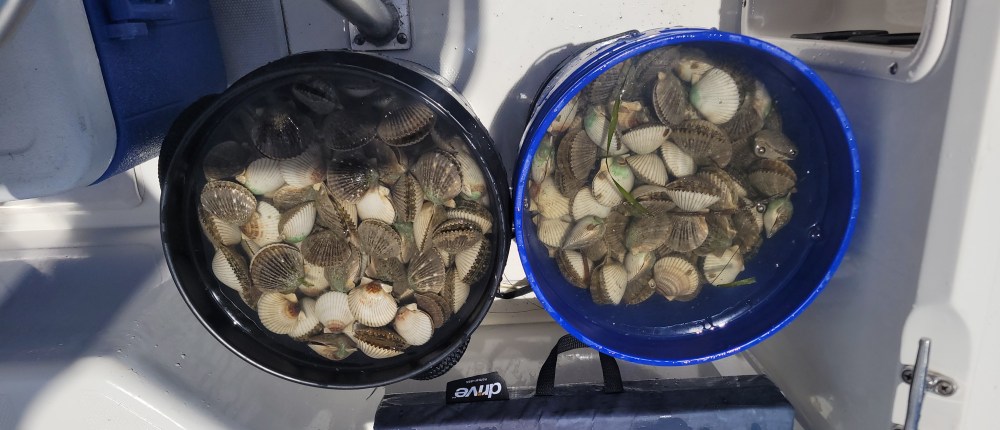
Scallop Season
Scallop Season is a great time to spend with family and friends in search of these tasty morsels. Also what is exciting about it, is the fact that it is a pre warm up before Lobster Season begins. The feeling of dusty off the cob webs from your diving gear means summer is upon us. Although Scalloping can be a very busy time on the water with plenty of boat traffic, as long as you display a diver flag from you vessel and have a look out on your boat you will be able to go hunt for the scallops and return in one piece safe and sound. Scalloping is a pretty easy thing to accomplish, all you need is snorkel, goggles, and fins in order to swim swiftly through the water looking for them on the grass beds the flats have to offer in north Florida. The only thing to keep in mind when looking for them is to take your time. It is very easy to overlook an area and going back over the same area is a good idea, because what you thought you have covered may still have some still laying around. Sometimes all you need is the sun to be at a different angle in order to shine over any left over laying on the bottom. Some key areas to such for are areas with tall grass growing on the flats with sandy holes scattered through out it. The majority of Scallops will be found on the out skirts of the sandy hole adjacent to the tall flush grass. You can even at times find them buried in the middle of the sand too. Typically once you find one keep going while under water, because there will be more unless the area has been picked over already.
Believe it or not Scallops move pretty fast as well, and just like fishing for fish they move with the tides. During the tides of a new or full moon the water is moving fasting compared during a half moon. When the water is moving you will at times see the scallop swim fluttering area on the bottom as it tries to make its way into another hiding spot. Once you depleted an area if you still have not got your limit, the best thing to do is to venture another 50 yards or so by boat and re anchor to start your exploration once again.
Cleaning Bay Scallops
When the day is completed and you have your limit of Scallops then the real fun begins, and that is to clean them all! If your lucky enough you will often see people offering their services to clean them for you, but if you are not then you will need to immediately ice down the scallops in order for them to open up, so it makes it easier to clean once you arrive home. After a few hours and the majority of the Scallops are opened up in your cooler, it is time to find a spoon and spare bucket to throw the guts into to discard at a later time. You first, will take your spoon and start on the dark half of the scallop scraping downwards towards it so that way you have only a half of a scallop shell left with the meat and guts looking up at you. The next step is to then start on the back side of the meat and swipe downward and to the right around the meat to scrape the guts out and throw into your spare bucket. The final step is up to you. You can either leave the meat on the shell and grill them up, or you can scrape the meat off the shell into a bag and save for later cooking date to make a delicious scallop ceviche or pasta.
Fishing Report Tampa Bay: What is currently Biting
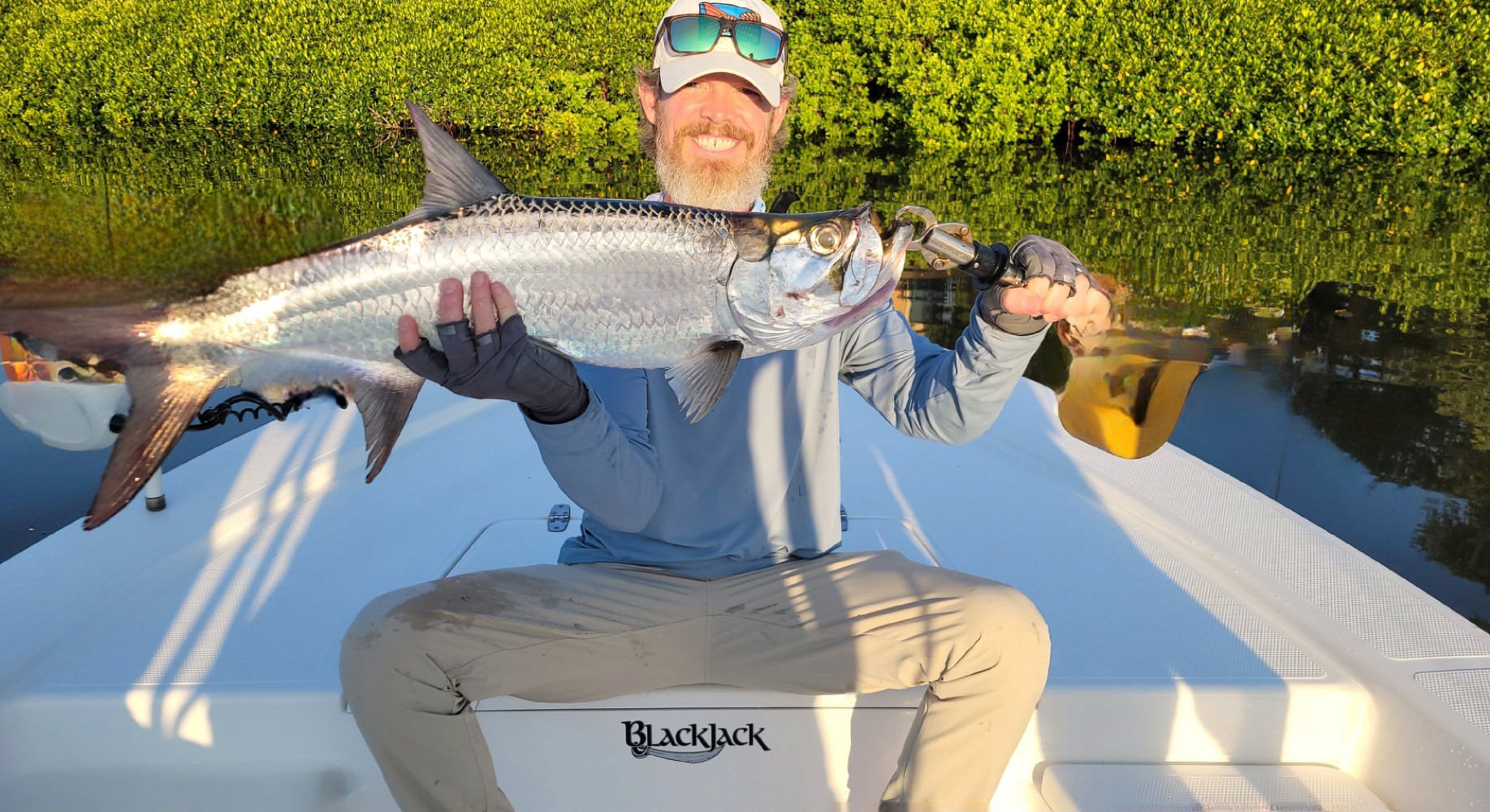
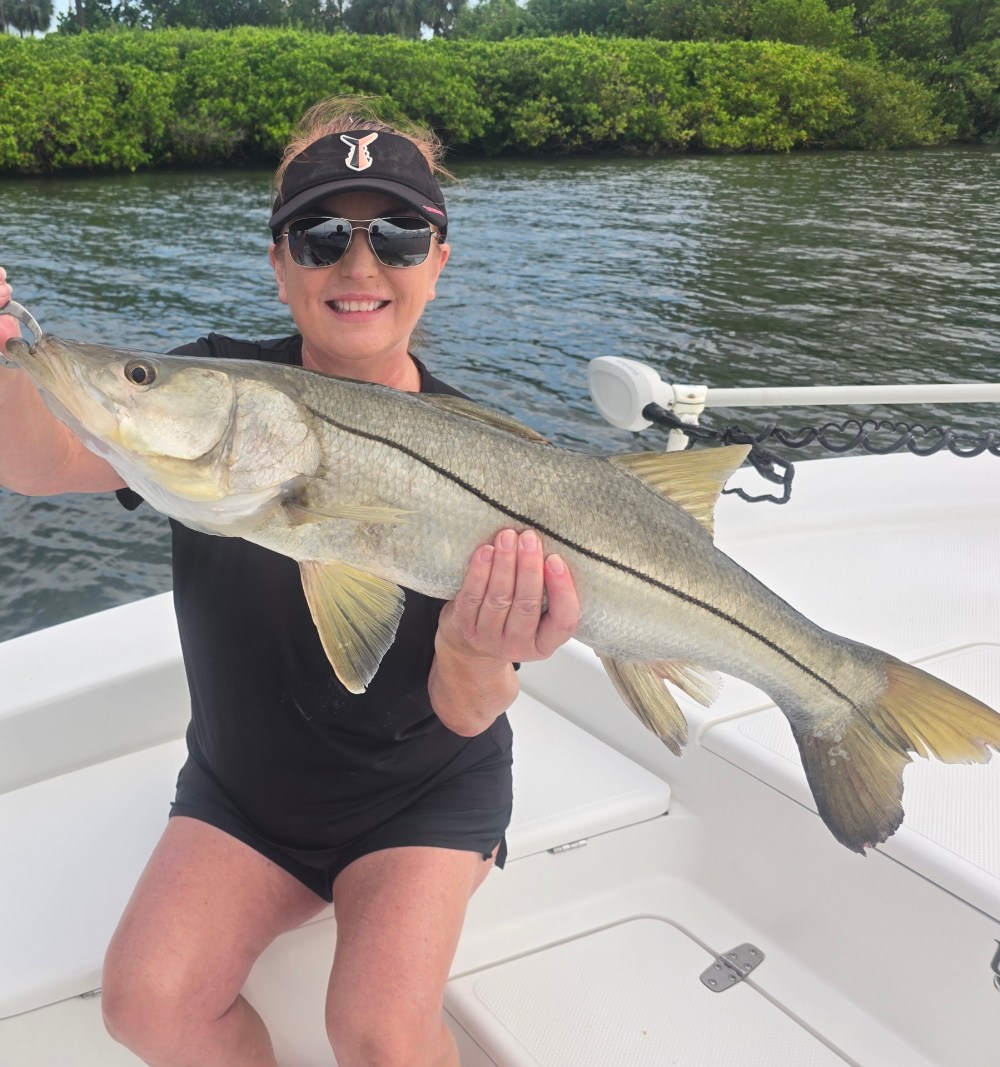
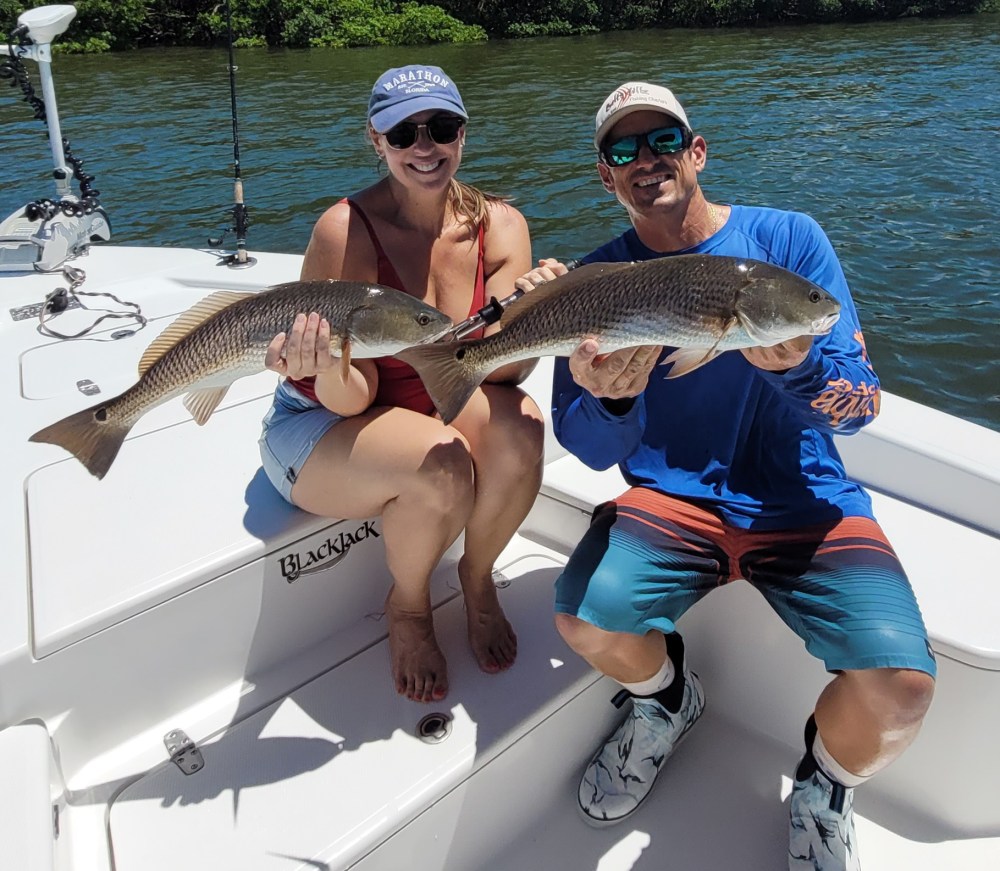
As of now being in almost late August the bite on our Tampa Fishing Charters has been really good when targeting Tarpon, Redfish, and Snapper. It has been a really dry summer up until the few weeks into July where the rain really started to come, which cooled our water temperatures and made the fish frisky. During these rainstorms it has really brought out the Redfish into Tampa Bay as they are starting to school up, in preparation for their spawn time. It has also pushed a lot of baby Tarpon into our Creek and Canal Systems, and has fired up the Mangrove Snapper before they head back off shore. Our baits of choice have been using the small pilchards that have infiltrated our area along with cut bait such as pinfish and ladyfish. Targeting the Redfish on the higher water has been the ticket lately, as with a high tide it pushes the Redfish up inside the mangrove column making the shadows of the mangrove areas a great ambush point for them to eat. Throwing a piece of cut pinfish, or ladyfish into these area rigged with 2/0 circle hook and split shot will lure in the Redfish enticing them to eat from the back of the mangroves. They also will not shy away from an artificial lure as well, especially if they a schooled up and stalking the flats. The early morning hours and the evening hours will be your best bet to present a natural looking lure to them as the temperatures during the middle of the of day can be unbearable for them with the water being to hot.
Snapper fishing has been firing off on all cylinders lately with the spawning period that had already taken place or is finishing up in some areas. These fish are on a feeding frenzy as they push back offshore for the time being but will be hanging around looking for a meal or two until our first cold front approaches later in the year. Match the hatch is the key phrase when snapper fishing. You do not want to use a big live bait for these fish, especially when all that is around are small pilchards. The Mangrove Snapper thrives off of eating these little baits during this time of year and really can rally up a good bite all through out the day as long as you have moving water. During our snapper trips on our Fishing Charters Tampa Bay, we like to get them fired up using either a chum bag hanging off the side of the boat or when catching bait just catch a little bucket full of extras to chum out by hand. When creating this chum line you are basically getting the fish to come off the bottom and into the water column behind your motor. When doing so, presenting a small pilchard on a small number 6 circle hook or a 1/0 circle hook from Owner hooks will do the job when drifting your bait back naturally in the chum line. Focus on artificial reefs, rock piles, and bridges when in search for the Mangrove Snapper. They also can roam around on the flats in the potholes and along the deep mangrove cuts as well during times of spawn, so be on the look out when searching for Redfish.
Tarpon, are still around making their final run of the year. Just like the Mangrove Snapper the Tarpon also like the abundance of small white bait swimming all over the place. They as well are filling up their bellies with as much food as possible before migrating to their winter time haunts, where they will stay until they migrate back out along our beaches and head offshore to spawn during summer time. Our local reefs that are spread out across Anna Marie, Ft Desoto, Tampa Bay, and Clearwater are good spots to check during this time of year for the Silver King, as well as our Bridges such as Sky Way Bridge, Gandy Bridge, and Sand Key Bridge, and Howard Franklin Bridge. Although you will find mostly all big Tarpon which can range from 60 to 150 lbs. with the above mention areas, this is a great time of year to also target the juvenile Tarpon which range from 5 lbs. to up to 20 lbs. They make for a great battle, especially when using Flats Class rated Gear. These baby Tarpon really like to put on a show with them jumping twice as much as the bigger ones and putting on a show. Stalking them in the, Rivers, Basins, Deep Channels, or Creek Systems will great starter points when looking for them. They really like to show them selves after a good rainstorm with all the rain runoffs we get during that period. These runoffs gather bait in certain areas which make for an easy meal for the Tarpon.
Another predator that loves to ambush these rain run off locations are Snook. The Snook bite is still going off during the later summer months but can be challenging until Fall, as these fish are moving back from their spawn and are traveling to their fall and winter time hangouts until Spring time occurs again. So it can be tricky to locate them during the full and new moons, since they use those great tidal stages as highways to get from location to location. If you located a pack of travelling snook, using a chum bait full of white bait chummers will for sure get them fired up, because they are also eating and filling up before our first cold front approaches, which will shut them down briefly. Even though it may feel steamy and hot outside during this time of year, just remember the fish do not care. Just adjust and adapt as if you were fish and find areas where the water temps will slightly cooler, such as in rain run offs, Deeper Channels, and along the shadows of the mangrove edges. If you need an helping hand, we will be honored to have you aboard on our Tampa Fishing Charters tours to put you on bucket list fish or just to make memories with loved ones. Tight lines!