Tampa Bay Fishing: The Complete Guide for 2026
They say the early bird catches the worm, and in your case, getting ahead with the 2026 guide to Tampa Bay fishing might just land you the catch of a lifetime. As you’re eyeing your next big fishing adventure, remember that Tampa Bay’s waters are ever-changing, teeming with sought-after species that challenge and delight anglers of all levels. From the nuances of seasonal migrations to the insider tips on bait and tackle, there’s a wealth of knowledge waiting to elevate your fishing game. Stick around to uncover the secrets that could transform your casual fishing trips into legendary tales of conquest.
Best Fish to Catch in Tampa Bay
When you’re fishing in Tampa Bay, targeting Tarpon, Redfish, and Snook is your ticket to an unforgettable experience. Each species presents its own set of challenges and thrills, ensuring seasoned anglers and novices alike can find something to get their lines tight. From the acrobatic leaps of Tarpon to the stealthy hunt for Snook, you’re in for a treat that combines skill, patience, and the right techniques.
Tarpon
Tarpon, often hailed as the ‘Silver King’ of Tampa Bay, offer an exhilarating fishing experience you won’t want to miss during their peak season from April to August. These majestic fish, known for their spectacular leaps and stubborn fights, present a challenge that seasoned anglers dream of. Equipped with the right gear, you’re in for the fight of a lifetime. Opt for heavy-duty tackle to withstand their power and employ techniques like live baiting or fly fishing to lure them in. Early mornings or late evenings are prime times, especially near the mouth of the bay where tarpon congregate to feed. Mastering the art of tarpon fishing in these waters requires patience, skill, and a bit of luck.
Redfish
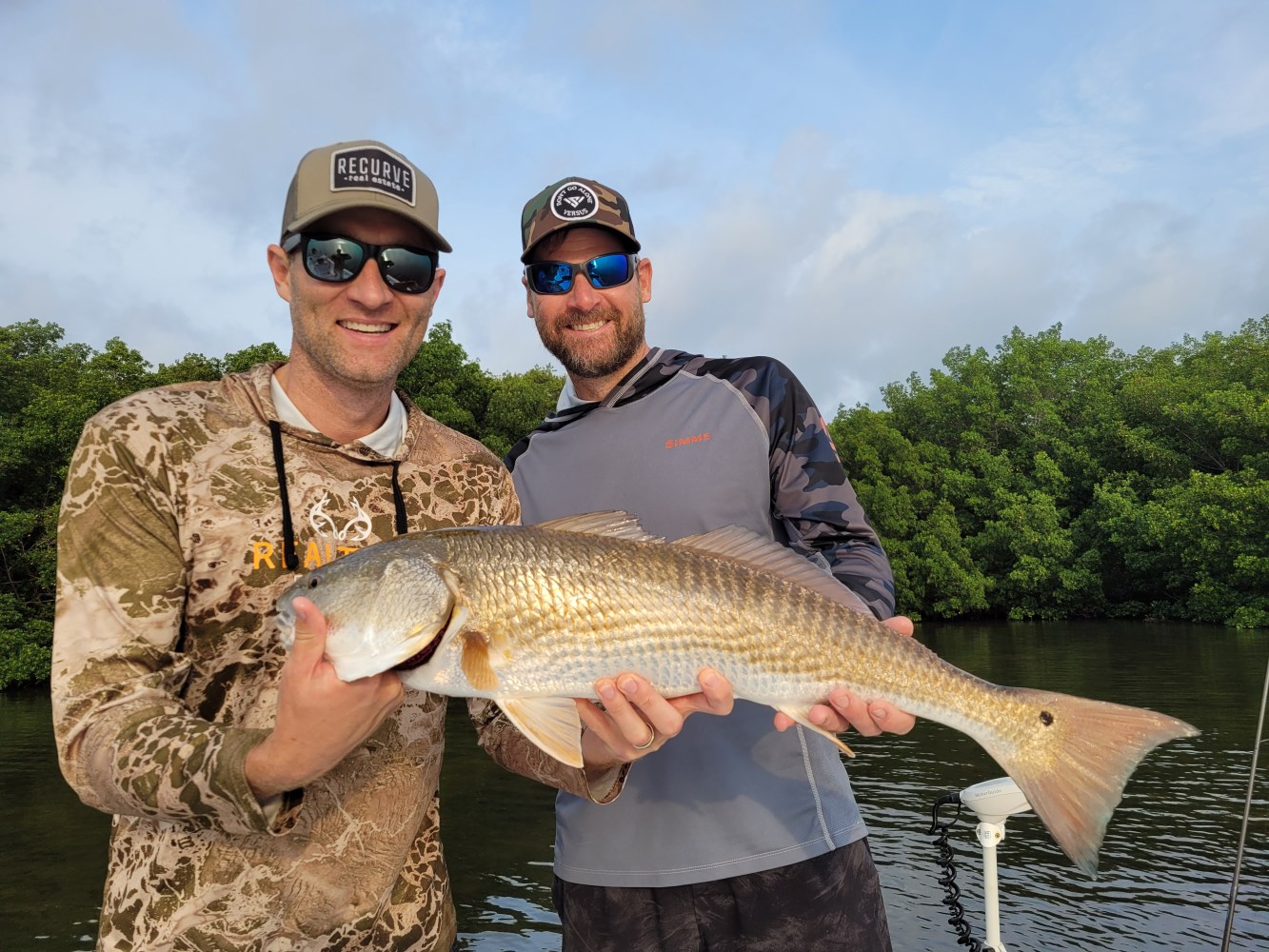
For avid anglers in Tampa Bay, targeting Redfish offers an unmatched fishing experience, thanks to their abundance and the thrilling fight they put up when hooked. These robust, copper-shaded fish, ranging from 15-35 inches, provide a year-round opportunity for both novice and experienced fishermen. The optimal time to catch them, however, is during the fall when they school up in the shallow waters of flats and mangroves, making for an exciting challenge. Employ light tackle or fly fishing techniques for the best action, ensuring you’re respectful of the local regulations, including size and bag limits. Understanding the behavior of Redfish, such as their tendency to tail in shallow water, will significantly increase your chances of a successful catch. Remember, patience and persistence are key. Typically Redfish are opened year round unless we get a real bad red tide up in Tampa Bay. So be sure to always check the Regulations for these back country beauties before embarking on your fishing adventure.
Snook
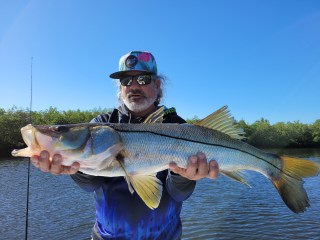
Snook, often regarded as the crown jewel of Tampa Bay’s inshore fishing scene, provide anglers with thrilling battles and unforgettable catches year-round. You’ll find these elusive fighters most active during spring, summer, and fall, making these seasons prime time for targeting them. Known for their sharp turns and powerful runs, snook demand a keen understanding of their habitat—mangrove-lined shorelines, bridge pilings, and dock structures are their favorite haunts. Employing light tackle and live bait, such as pinfish or mullet, significantly increases your chances. Remember, snook are catch-and-release only during certain times of the year, so you’ll need to stay updated on current regulations. Mastering the art of snook fishing not only tests your skills but rewards you with exhilarating experiences on the water. If your looking harvest them, be sure to acquire a Snook Permit and follow the current Regulations for your region.
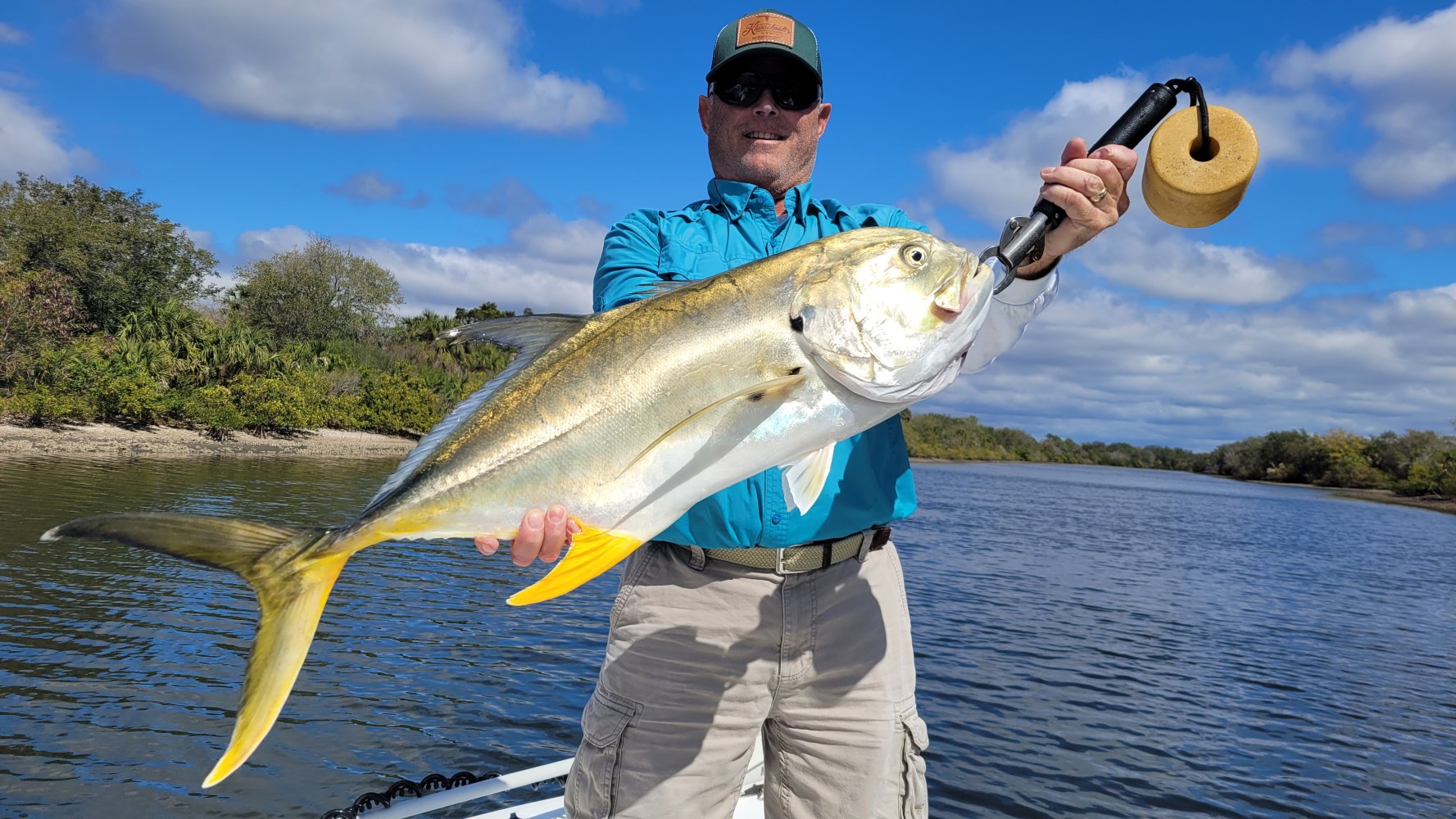
Although the above species mentioned above are the top species targeted, one specific fish that really does not get a lot of talk about is the Jack Crevalle, as pictured above. These fish pound for pound will take you on a wild ride, as they peel out yards and yards of line from your fishing reel in order to escape. I call this fish canal tunas because this is the closest thing we will get to a tuna in Upper Tampa Bay. These fish like to swim sideways like tuna as they use that big fork tail to swim deeper and deeper leaving you with a sore arm afterwards. Also not to mention, when getting into these fish they normally like to swim in groups, so throwing anything from a topwater bait to a live bait on circle hook is nothing less than exciting when watching them crush your bait on the surface of the water.
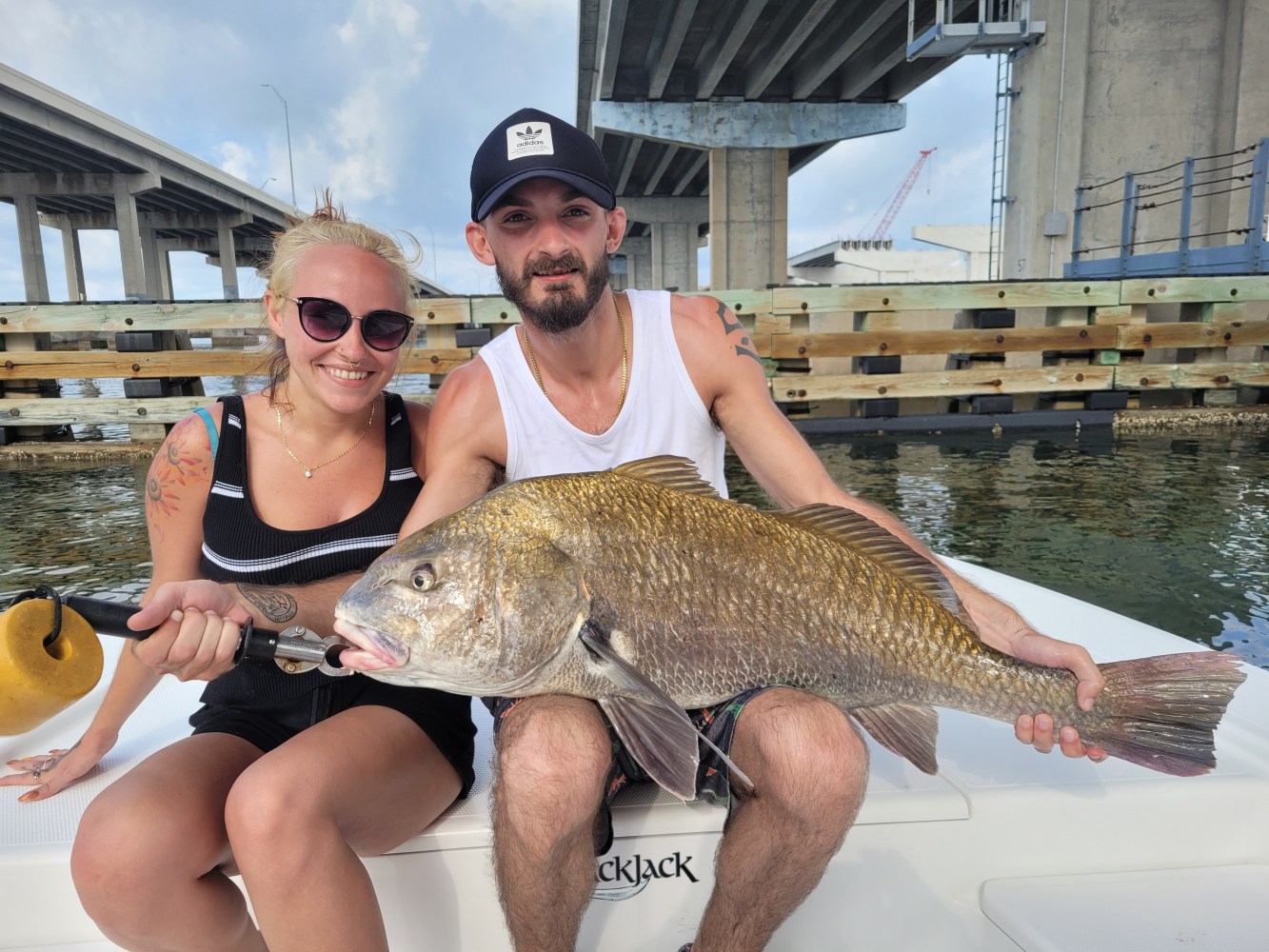
Black Drum
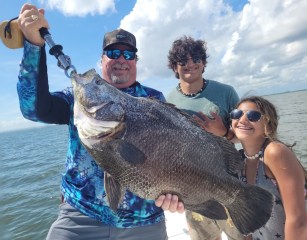
The Black Drum, a.k.a. the big ugly is another fan favorite that we like to target on our Tampa Fishing Charters. If your looking to play tug of war with a big fish, these would be the ones to target if fishing inside Tampa Bay. We like to use our big 6500 series spinning setups for this fish, since you have to drag them out of their homes from under the bridge pilings and fenders. Big leader is necessary to be success on bringing them to the boat, some where in the 60 to 100 lb class should suffice and a 7/0 circle hook. We like to use Blue Crabs or Shrimp to target these big fat fish since they are predominantly crustacean eaters, however using a jig with a paddle tail or a docs goofy jig also works, as it resembles a fluttering crab going down the piling or on the bottom. These fish often travel in schools as well starting in February around Pinellas Point and work their way up inside Tampa Bay to the local bridges where they will call home during the summer months. Here are the Current Black Drum Regulations.
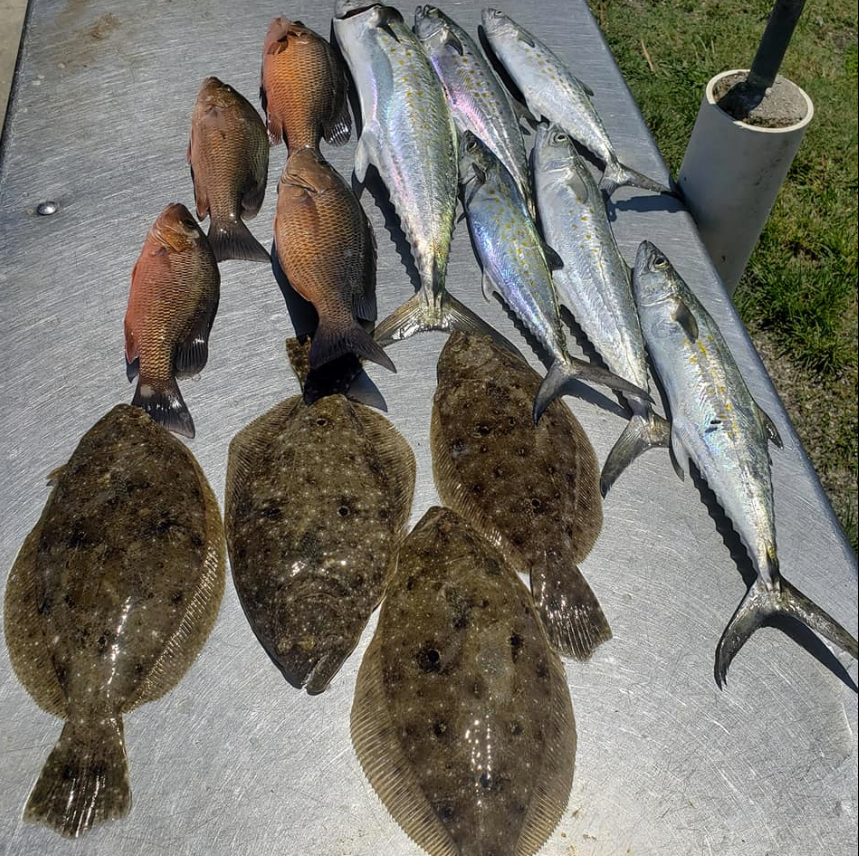
Mangrove Snapper
Snapper is one of the all time favorites of fish to target if looking for a tasty meal. Even though they are called mangrove Snapper, you often can find these fish in deep water structures, such as rocks, bridge pilings, and sunken barges. Also in parts of Tampa Bay you can find them hanging out tight under the mangroves on the higher tides. Our Tampa Bay Fishing guides will usually go to the same areas where we are targeting Sheepshead during the wintery colder months, since both species like the same habitat to lay in waiting for their meal. When targeting Snapper, it is not a bad idea to bring a chum block or even cut up pieces of bait to throw in to try and get them chummed up from the bottom out of the structure. This technique is proven way to eliminate break offs since you already have the fish out of his hiding spot. Tackle of choice when targeting Snapper, we like to use a medium action rod, paired with a 3000 series reel, rigged with a 1/0 circle hook. You can either use a knocker rig style will a oval weight is added onto your 20lb to 25lb Fluro carbon leader so that it slides up and down above your hook. When fishing faster tides this is normally the way to go, or you even can put your bait on a quarter ounce jig head to get to stay on the bottom waiting for the strike. When the tide starts to subside and get slower, presenting a piece of cut bait on just a flat line, which is just a hook tied onto your leader can be very productive especially when you have the fish chummed up from the bottom. Tossing your bait behind your motor and slowly feeding line through your finger tips until you get a strike, will make your presentation look natural , just like your chum line. As for as baits, using a shrimp or pilchards will be the way to go, but sometimes using a tiny pinfish can definitely get the bigger ones to hit. So if you are in the mood for some fish ceviche or fish tacos, catching snapper is the way to go. Click on the on the link for Current Gray (Mangrove Snapper) Regulations.
Spanish Mackerel
These toothy critters can make a great time on the water. They are often found in schools herding bait fish in pods on the surface as they are striking at them from beneath. When you start to see birds diving into the water, that is a great indication there is a bait ball created with fish below them. It would be a good time to throw a chum block out or handfuls of live bait fish to keep them happy and biting right behind the boat. When targeting Spanish Mackerel, it would be a good time to upgrade your leader line to at least 30 to 40 pound test leader since this fish have very sharp teeth and can often cut through your leader in just one swipe. It is not uncommon to even use a number 6 wire leader to prevent multiple break offs. Another good idea is to also use a long shank J hook to prevent their mouths from touching where knot meets your hook. Spanish Mackerel make great table fare (Current Regulations) the day of catching but is not recommended to freeze them afterwards, because they have the tendency of getting mushy after defrosting. They are really a great fish to smoke as well on your grill then make a fish dip with them afterwards. Spanish Mackerel can be often found around are reefs in Tampa Bay, deep channels, Bridges, and shoals depending on what time of year you plan on fishing for them.
Speckle Sea Trout
Trout is one of the staples we have in Tampa Bay, not only are they plentiful at times but they as well make up a great meal (Current Regulations) after being on the water all day. They can be tons of fun to catch since at times when you catch one, it is more than likely you will catch more. If you plan on taking kids fishing, this is great fish to target since even the little ones can catch them all by themselves and it makes for a good rod bending day. Speckle Sea Trout have many areas where they like to travel too and depending on what season of the year you are fishing for them, will determine if you will have great day of fishing or a bad one. On our Tampa Bay Fishing Charters, here is good thing to remember when fishing for trout. During the colder periods such as winter time, these fish like to hang out in groups in creek systems and also deep channels. The main reason is because there is more tidal flow in these areas and with good tidal flow comes warmer water. As it starts to get hotter and we enter the spring and summer season, you can find these fish more commonly in areas like deeper grass flats or even the edges of the flats were it gets deeper by an extra foot or two. One of my favorite ways to target Trout is often with jigs, since these technique allows you to cover more water in order to locate them. Once located you can either decide to keep fishing with jigs or start chumming them up with live bait if you have children on the boat. One thing to keep in mind when fishing for trout is that when you are in the fish and catching them, if you start to see dolphins around, it is normally a good idea to find another trout hole. As much as we like to catch trout the dolphins like to eat them. They will literally circle around your boat and until you throw one back and they will crush them as it makes it an easy meal for them. When targeting trout, it is ok to use a light to medium action rod paired with a 2500 to 3000 series spinning reel, with a 1/0 circle hook and 20 to 30 pound leader.
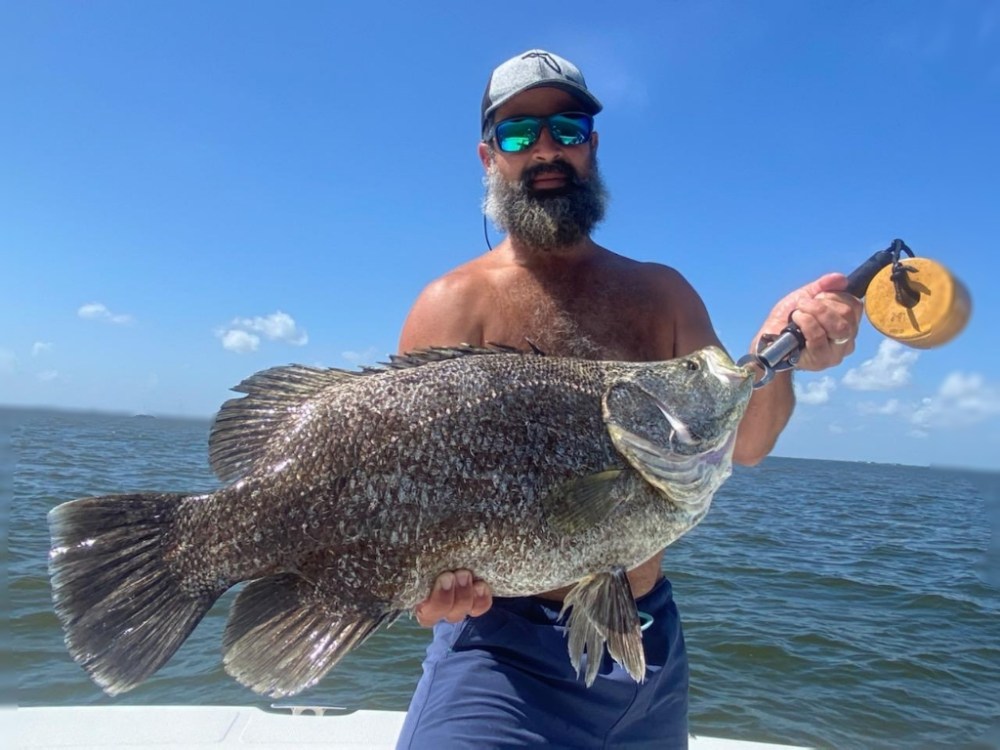
Triple Tail
Triple Tail are such a pre historic looking type of fish. It is really interesting that they really do have 3 tails. They use these tails to swim sides in different depts of the water columns looking for a meal. You can usually find them on pilings, floating grass, debris, and crab trap buoys. These common areas hold little bait fish they try and hard from larger predators, however the Triple Tail know this and they will hang around these areas ambushing live baits. Some common tactics people like to use is the run and gun method, which is pretty much going from buoy to buoy or even driving around until they see debris or floating grass. When driving by these areas you will see them just below the surface of these items swimming sideways. Once found you can circle back around on the boat to preset a live bait to them of your choice and watch them eat. On our Tampa Bay Fishing Charters, we like to multi task and use this method when travelling to each fishing spot. However when we start catching triple tail on certain pilings or buoys we will mark them and fish them at times, using a split shot to get down further in the water column. You will not always see Triple Tail on the surface, they also like to hang down some times and using a split show on the leader line is a for sure way of getting your bait into their target zone. As for as table fare, it is honestly one of my favorite eating fish, due to their diets and thick fillets. So next time your out and about just driving the boat on a fun day on the water around Anna Maria, Clearwater, Egmont Key, or inside Tampa Bay, always bring a rod with you and few bait and drive by the crab trap buoys, since you will never know unless you go check. Here are the Current Regulations for harvesting Triple Tail, be sure to always check before heading out to target them, because they can change instantly.
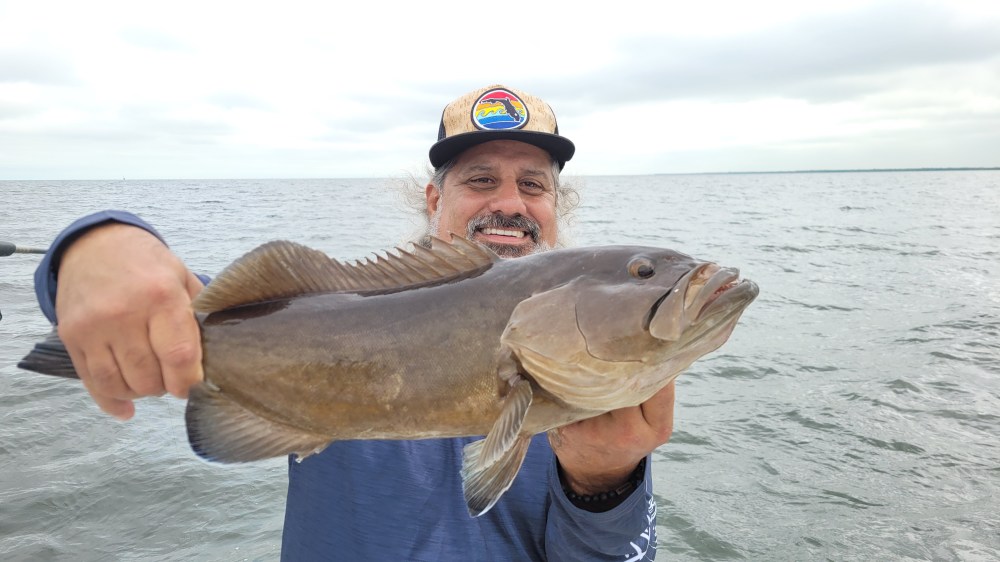
Gag Grouper
The Grouper! Of course everyone likes to eat grouper due to their delicacy meat and texture. This is why during Grouper season which changes every year, you will often see tons of boats fishing for them from Anna Maria, Clearwater, St. Petersburg, Tampa Bay, and all the way north to Anclote. Grouper are not only a great eating fish, but also are great fighters. I mean after all, you are pretty much ripping them out of their homes from the bottom and they do not take to kindly to this. Grouper love structure, this can be rock piles, edges of deep channels where there is limestone, sunken barges, or reefs with coral. Just like snapper fishing when the water movement is fast, these predators like to hang tight to there home dwellings, so making sure you have the proper weight on your leader is critical to get your bait down deep into their target eating zone. Once the water starts to slow down in movement, you then can proceed to use the chumming method to get them chummed up from their hiding spots to prevent break offs in the structure. Grouper are not really picky eaters if they are hungry, but it is always a good idea to bring and variety of baits with you when targeting them. This can range from live pinfish, Threadfins, Pilchards, and even at times Shrimp during the colder periods. Once cool thing about Grouper fishing is that there our multiple ways for fishing for them. You have the deep drop, flat line, and trolling technique to choose from. Typically on our Fishing Charters Tampa Bay, if it is known rock pile , or even a spot on a reef that we have caught them their before, we would just stage up on that spot and drop baits down to them. However, if you are looking for new spots and want to cover some ground, the trolling technique is very effective at that, using large hard baits and even jigs with curly tails attach, trolling behind your motor going 3 to 4 mph will get the job done. It is also not a bad way to cool down during the summer time as trolling gives you some natural air condition as you are motoring around your target locations. Just be sure when doing so, when trolling, look at your bottom machine start to mark the new random rock piles that you may drive over, because you just never know when the grouper may want to use that location next. Here is a link for current harvesting regulations for Gag Grouper.
What’s Biting in Tampa Bay
So currently we are in Spring time season, and just about every species we mentioned above is going off depending what area you are targeting. The Spring is a very magical time of year as the waters warm up and tons of bait pods start to filter through the entrance of Tampa Bay. Along with these bait pods , the fish follow behind them creating great fishing days on the water making great memories for your family. Just take your pick on which species you want to target and start locating those spots they like to hide in, rather it be snapper on reefs to snook along the mangrove edges, Spring time is the right time to get out and fish!
Tampa Bay is a large estuary for many of species of fish, including some of the ones mentioned in this blog. Some are great just for sport and some are great for table fare. So no matter which of the two you are going for it is always fun just being out on the water soaking up the sun rays enjoying what mother nature provides us. It is a great time to make memories with the family, while you are fishing, chasing the dolphins, or just simply watching the birds fly. We cater to all types of anglers, so no matter if your a beginner, novice, or a professional, we would be happy to have you join us on our Tampa Fishing Charters.