April Fishing on Tampa Bay
Spring Time Fun on Tampa Bay
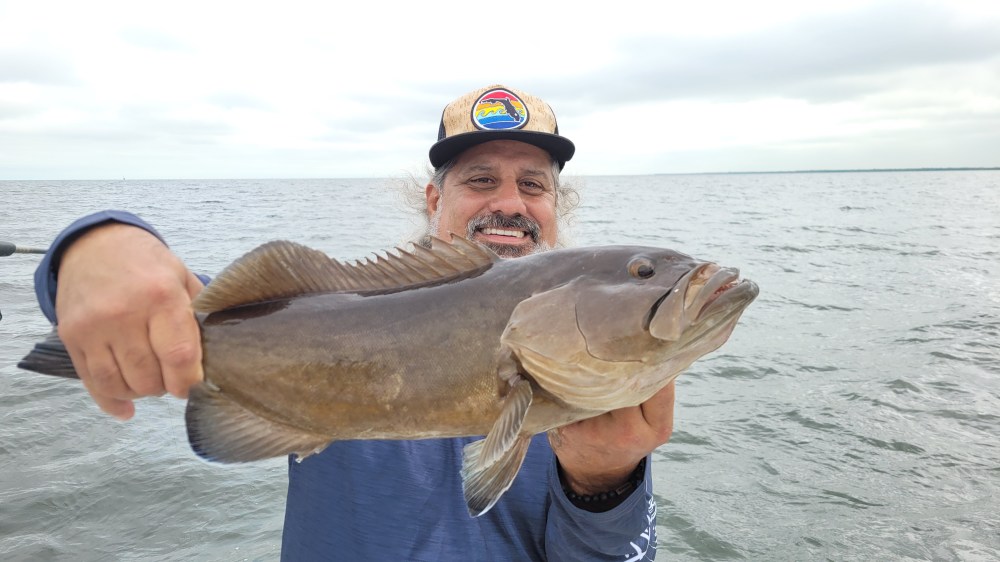
April Fishing on Tampa Bay is nothing short but exciting! It is the time of year on our Tampa Fishing Charters where the mornings are still brisk but as the day progresses it starts to heat up. It makes it a challenge to dress appropriately for the day, but I will take it all day long compared to the winter months. As we enter spring officially and spring breakers start to invade Tampa, the fish are also happy to get out and enjoy the warming of the waters. As the waters warm up, this brings in a big influx of bait we call Pilchards and Threadfin Herring. We start to move on from our winter habits such as using shrimp and start filling our live wells full of live bait. Scaled Sardines become more dependable as we into spring season as schools of this type of bait start coming in from the Gulf invading Tampa Bay. Along with the bait moving in it starts to push good numbers of fish into our region chasing these tasty morsels. Some species that you will start to see more plentiful will be Sharks, Gag Grouper, Redfish, Snook, Sea Trout, Flounder, Mangrove Snapper, Spanish Mackerel, Tarpon, and Kingfish. It is such a big variety of species to target and makes it really fun to see how many you can catch of each species in just one trip.
How to Catch Bait on Tampa Bay
As being a Tampa Bay Fishing Guide in Tampa, one of the most frequent questions I get asked a lot is how to catch bait. On our inshore fishing charters when you book, we meet you at the boat ramp already loaded with live bait. When customers step onto the vessel they open the live well hatch and are ecstatic that bait catching is already done. That is because on our Tampa Fishing Charters we get out earlier then the time we meet at the ramp to catch bait, so that way we get the full amount of time booked to just fish and not waste time catching bait. So what does it take to catch bait? First off, you will need a cast net. My preference is typically either a 10 ft or 12 ft net. Although there are many brands out there such as Calusa, Dropout, Wholesale, Black Pearl, or Humpback cast nets they all do the same thing which is catch bait. What really matters is the weight and mesh size of the net. On our Fishing Tampa Charters we like to use a 10 ft with 3/8 mesh 1.5 lb per foot net. We will use this net pretty much the whole year until the bail gets on the flats during the summer. When using this type of net size it allows you to throw near the range markers, barges, channels, and bridges as it sinks down typically fast due to the mesh size. When we start throwing the nets on the flats near grassy pot holes during summer you typically are only in about 1 to 2 feet of water. So with the dept being so shallow you will not need a heavy net to catch the bait. For this type of application we will start to use a 12 ft net to cover more ground but with a weight size of 1lb per foot, with the same mesh being 3/8. The reason for the same mesh is so some of the grass you catch on the flats will just go through the net instead of being caught up in it as you pull the net in.
Although the 3/8 inch mesh size is a popular net a lot of folks also like to use the 1/4 inch size mesh as well. This is because during the year their is something called the Hatch, and what this is, are baby baits that have been reproduced by the bigger scaled sardines. Using the smaller mesh size during the Hatch is ideal so you do not get the baits stuck in the net, or what we call a “Christmas Tree”. It is a pain to get all the baits unstuck and at times it may lead you to snap the heads of the baits to pull them through. So now that we have discusses size and mesh for your cast net choice another item needed is to lure or attract the baitfish in so you can catch them with your net. An item that is widely known for this is Fish Chum or Tropicana Fish Food. This substance is a must have to catch live bait on Tampa Bay. Once you have you fish chum, it comes dry so you must throw some in a bucket with a little bit of water and swash around until it becomes much like a paste. Once you have the paste created start throwing just little pieces into the water, normally setting up current of the tide so the chum flows away from you creating a slick in the water. After doing this process for about 15 minutes or so start throwing your net and watch as you are rewarded with live bait for your fishing day. One thing to always look for when finding bait are the birds. So when you are enjoying your boat ride be sure to be on the look out for pelicans, seagulls, turns, and cormorants, because these are dead give aways if there is bait in that particular location you are at, rather it is flat with grass beds, or open structure such as a bridge or range marker, always look for the birds.
What is biting around Tampa Bay
You can expect pretty much a wide variety of fish species being caught for this time of year. Inshore you have Snook, Redfish, Trout, Cobia, Triple Tail, Sharks, and Tarpon. Offshore / Nearshore you can expect Spanish Mackerel, Kingfish, Tarpon, Grouper, and Sharks. For the inshore species the primary three targets we go for on our Tampa Fishing Charters are Snook, Redfish, and Trout. We you catch all three of these we call it the Tampa Bay Slam which a lot of local tournaments use to determine the winner by adding the total inches of each individual Fish in each category. If you add a Tarpon into the mix making it Redfish, Snook, Trout and Tarpon then we call that the Tampa Bay Grand Slam.
Snook
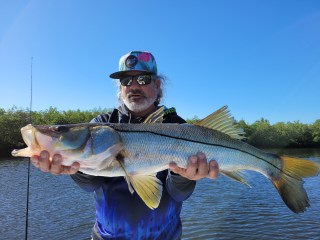
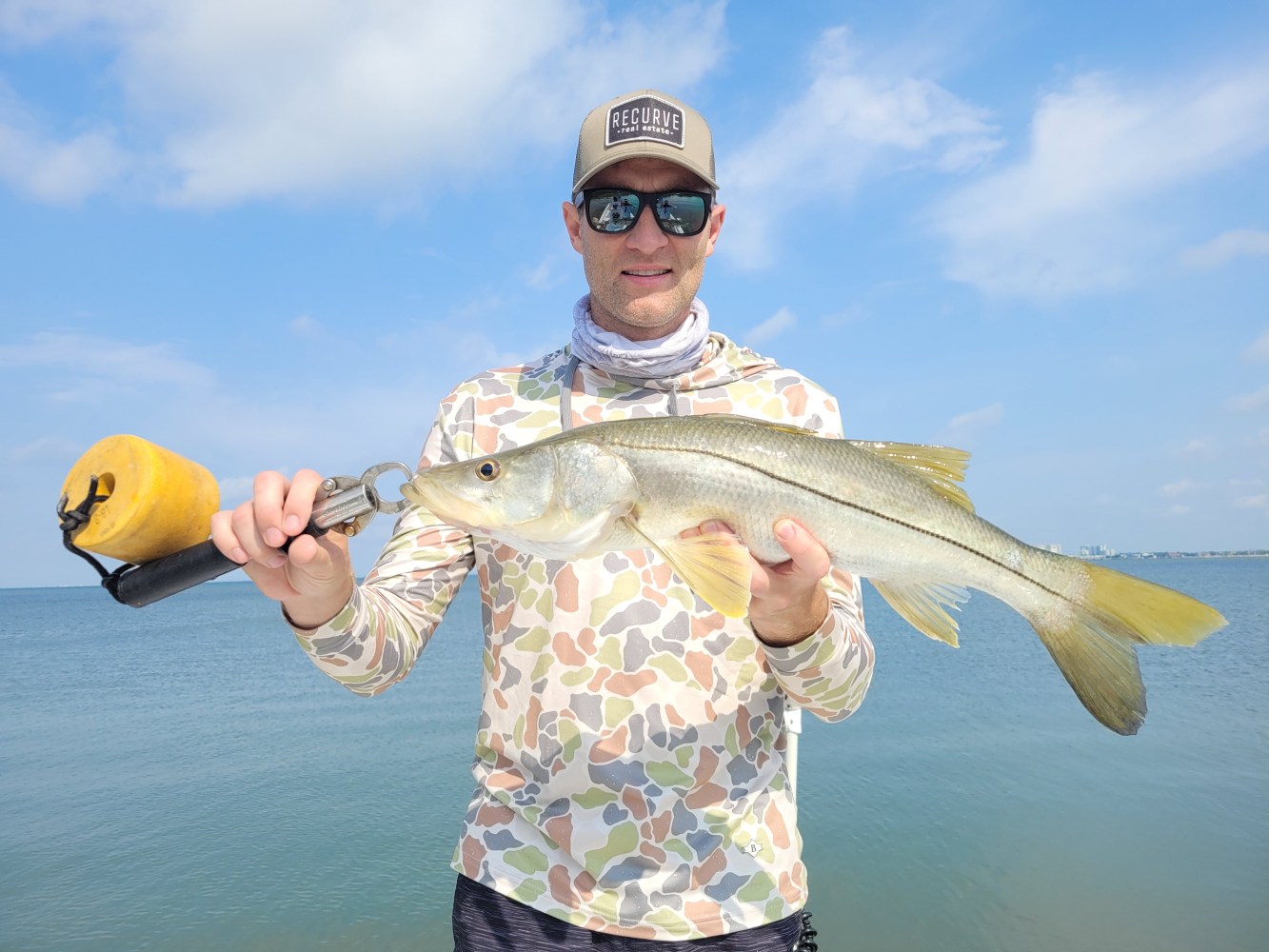
When looking for this type of fish you want to search Creeks, Channels, Rock structure, and grassy flats with pot holes. These fish like to stalk their prey by sitting in ambush points where current is present then forms an eddy. Snook are very much like a Large Mouth Bass in this type of scenario because they will stay present in these ambush points until they see their meal come through with the flow of the water. Starting points for this time of year coming out of the winter season hiding spots, we would look for anything adjacent to Creek mouths or Canals. Snook like to hang in muddy water during the winter time due to the cold, but once the water starts to warm they will start heading out into the open bay and these areas adjacent of their winter homes are like highways we like to call them. When fishing for Snook, a nice live pilchard or piece of cut threadfin will do the trick, as they can resist a nice hearty meal after dieting on shrimp during the colder months. The type of tackle we like to use is a medium action rod with a 8lb to 17lb line class, with a 3000 series type real, lined up with 15lb braid and 30lb fluorocarbon leader line. Snook have a season where you can keep them which is the months of March, April, September, October, and November, with a slot size between 28in to 33in. It is known to call them a soap fish to many but if you cook it right or even deep fry making fish nuggets, they make great table fare. Just be sure to order you Snook Permit in case you plan on harvesting one of these tasty fish.
Redfish
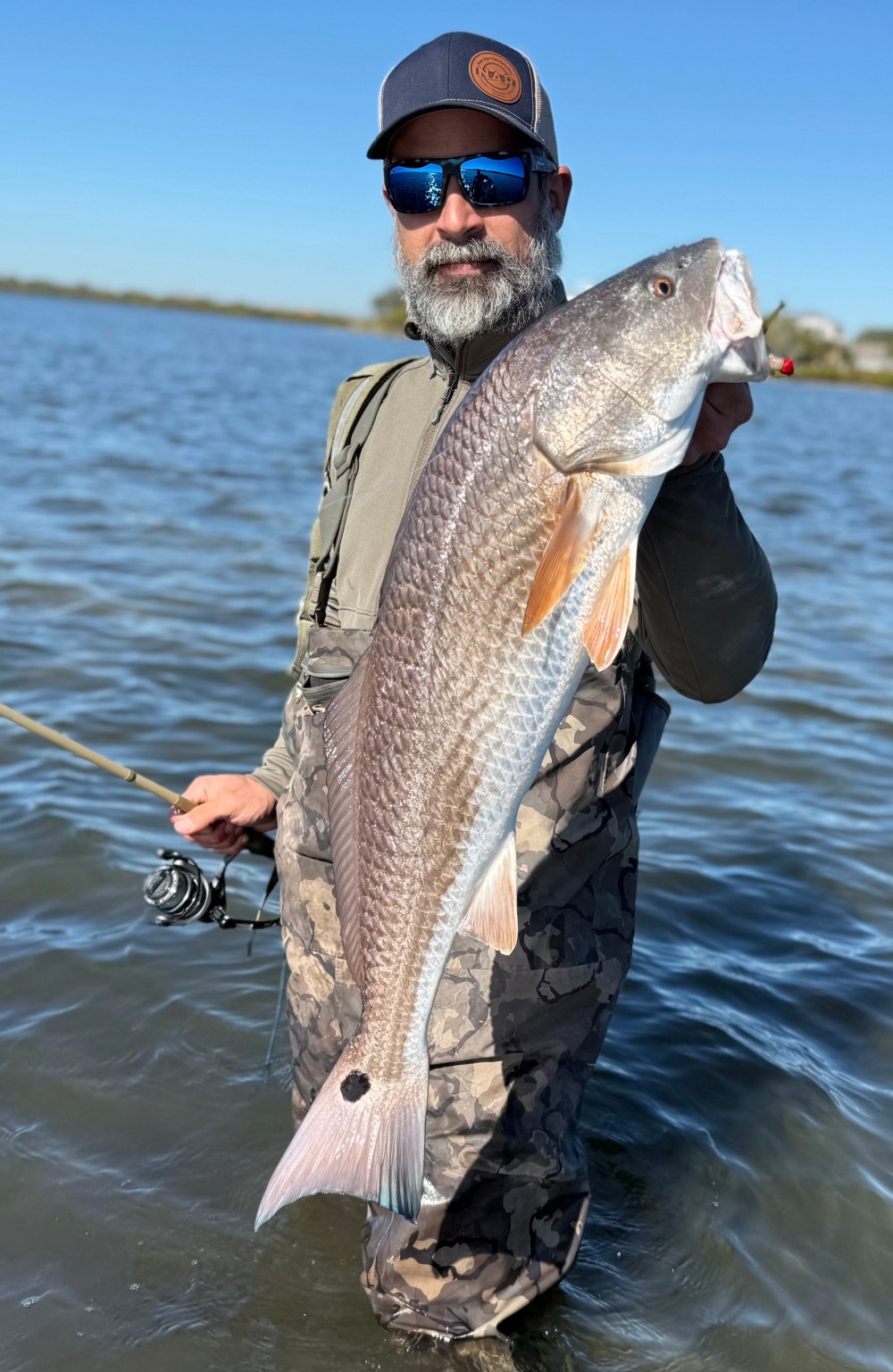
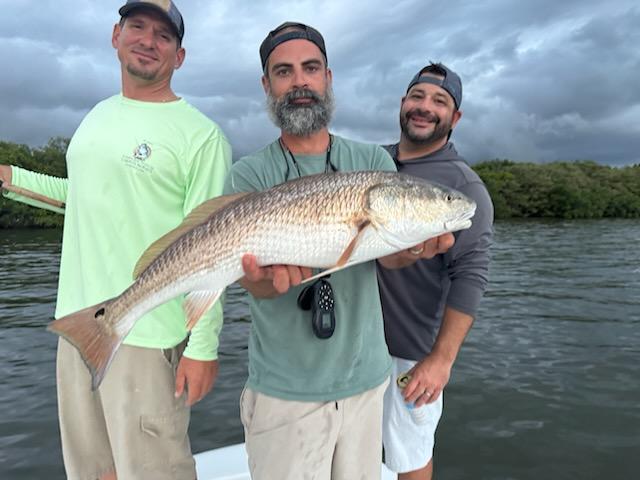
One of my favorite fish to target for this time of year. There is nothing like stalking a nice pristine flat with turtle grass and pot holes in search of Red Drum. It is not uncommon to find them in schools for these time of year, in which make for great back to back rod bending action on our Fishing Charters Tampa Bay. When hunting Redfish, as a Tampa Bay Fishing Guide, we like to go off the tide tables. Tides play a critical role in finding your Redfish. Redfish typically like to stay in shallow water for the most part when hunting their prey unless you can get on the big breeding Red fish near shore this time of year. As for our Redfish fishery in the upper Tampa Bay shallow water is the main ticket. Play the tides when in search of these, for example, on a low tide focus on oyster beds or pot holes due to the low water and these areas give the redfish a nice comfortable spot to lay up in where it is a tad deeper by a few inches. This makes these areas more favorable for them to stay happy and eat when a meal comes by them. Also when fishing low tide, combine with the outgoing, you will start to see them tail which means they are feeding with their heads down and their tails pointing out of the water. It is such a cool sight to see when stalking these predators. When you are facing a opposite water condition such as an incoming or high tide, focus more on the mangrove shore lines. Look for any pockets, points, or small passes. These fish will use these types of areas to stage up and wait to eat when a bait goes by them. As for bait of choice, cut bait or a live pilchard will get the job done. Just always remember when looking for Redfish you want to locate the mullet schools. Mullet schools show the highway fish will be traveling in when the water column is at various depths. Redfish like to also follow the mullet schools because when mullet travel, they stir up the ground which then makes it easy for Redfish to eat a nice meal such as shrimp, minnows, or even crabs. For for fishing tackle, a medium size rod with 8lb to 17lb line class, with a 3000 series reel, lined up with 15lb braid, and 30lb fluorocarbon leader will work. Red drum can be kept year round, but is limited to 1 per person and capped at 2 per vessel in our Tampa Bay Region. They have to be between 18inch to 27inches in order to keep, and make a great blackened Redfish Meal. Always be sure to check out regulations on the FWC website though because they are forever changing and it is always good to be kept in the loop so you can avoid any fines when keeping fish for harvest.
Speckle Sea Trout
When fishing on our Tampa Bay Fishing Charters, Speckle Sea Trout is always a good go to when taking clients out on the water. Not only are they fun to catch in great numbers, but they also provide go table fare and a great time for kids of all ages. Sea trout like to normally travel in schools, so when you catch one you know there will be more around making it a fun time with back to back rod bending action. When also catching Trout it is not uncommon to also catch a lot of by catches keeping you busy on reeling in your next fish. Some of the fish we encounter on our Fishing Charters Tampa Bay as a by catch to sea trout can include, Sharks, Flounder, Ladyfish, Jack Crevalle, Pufferfish, Lizardfish, and of course Catfish. When in search of Trout we commonly look for deeper grass flats, channels, creek mouths, or even canal systems. Just like the Snook, trout like to stage up into those deeper back water areas as they feel more protected from the winter elements and sometimes can be what we would call fishing in barrel when you get into these areas in very low tides. It does not really take much to catch a Trout, but some of the tackle we use when catching them is a like 6lb to 12lb line class rod with with 2500 series reel, lined up with 15lb braid and 25lb fluorocarbon leader. As for bait of choice a live pilchard, shrimp, or even jigging artificial lures will get the job done. Regulations for Sea Trout in our region currently are 3 per person and have to be between 15inches to 20inches in order to keep.
Spanish Mackerel
The Mack Attack! Spring time fishing Tampa Bay brings pelagic species into our region when the bait fish start to migrate from offshore into our Tampa Bay Estuary the Spanish Mackerels, Kingfish, Cobia, and Tarpon are to follow. Spanish Mackerel put up an nice drag screaming fight and is also one of those fish species where you can catch one after another if your setup just right on the water. When targeting these toothy critters, setting up on a reef or deep channel can be very productive. When out on the boat and cruising into your fishing spot be on the look out for any birds such as seagulls, frigates, and pelicans. Since Spanish Mackerel follow the bait the birds will tell you where the bait is at by dive bombing on them in order to eat. As you approach the bait, it is not uncommon to start seeing Spanish Mackerel in a feeding frenzy, blasting baits on top of the surface. Setting up a chum block tied onto your boat will also bring the Spanish Mackerel in to your targeted area, once they are in your area start chumming live pilchards or Threadfins out alive and watch the action begin. Just be sure to use a higher type of leader line such as 40lb fluorocarbon or even at times a number 6 wire leading, because these hungry aggressive fish have very sharp teeth and will bite through your setup in one swipe. You can use a normal flats setup such as a 8lb to 17lb line class rod, paired with a 3000 series reel to get these fast pulling fish to the boat. The Areas around Anna Marie Island, Egmont Key, Skyway Bridge, Pass a grille, and Clearwater are very productive areas to target these fish for April.
Triple Tail
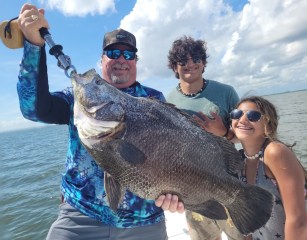
Triple tail fish are such a unique fish species, not just the fact they look prehistoric but also the fact that they swim sideways at times when feeding of the buoys and markers. They use their 3 tails to hoover in one spot, which also makes them great fighters when caught. Triple Tail like to hang out around floating debris, Range Markers, Crab or stone crab trap buoys, in search of their prey. Targeting Triple Tail is more of what we call a run and gun experience on our Fishing Charters Tampa Bay, since you can normally see them when checking all of the above locations. You pretty much just go from buoy to buoy, range marker to range marker or look for any debris such as grass lines or trash on top of the water. The reason why these fish like these areas is because of the small minnows and bait fish that hang around just under the surface of these objects. The bait fish I presume feel more secured hanging in the shadows that these objects give off making them less subjected to being eaten by predators as they blend in. When in search of the Triple Tail the run and gun tactic certainly pays off and is more like a ration game. You figure the more range markers, buoys, and surface objects you check you soon will be able to spot a Triple Tail Fish. I have found when you start catching Triple Tail on certain buoys or markers continuously it is a good idea to mark that certain one and actually fish it instead of driving by it. Sometimes Triple Tail just do not hang out just beneath the object but sometimes down in depth along the object such as a crab trap line or the base of the range marker. We actually have caught some of biggest ones using this method instead of the drive by method. Also another tip for Triple Tail locating is looking for the most crusty looking Range Marker or Crab Trap line that has barnacle growth coming off of it, because these are the ones where the tiny baitfish will cling onto the most.
Black Drum
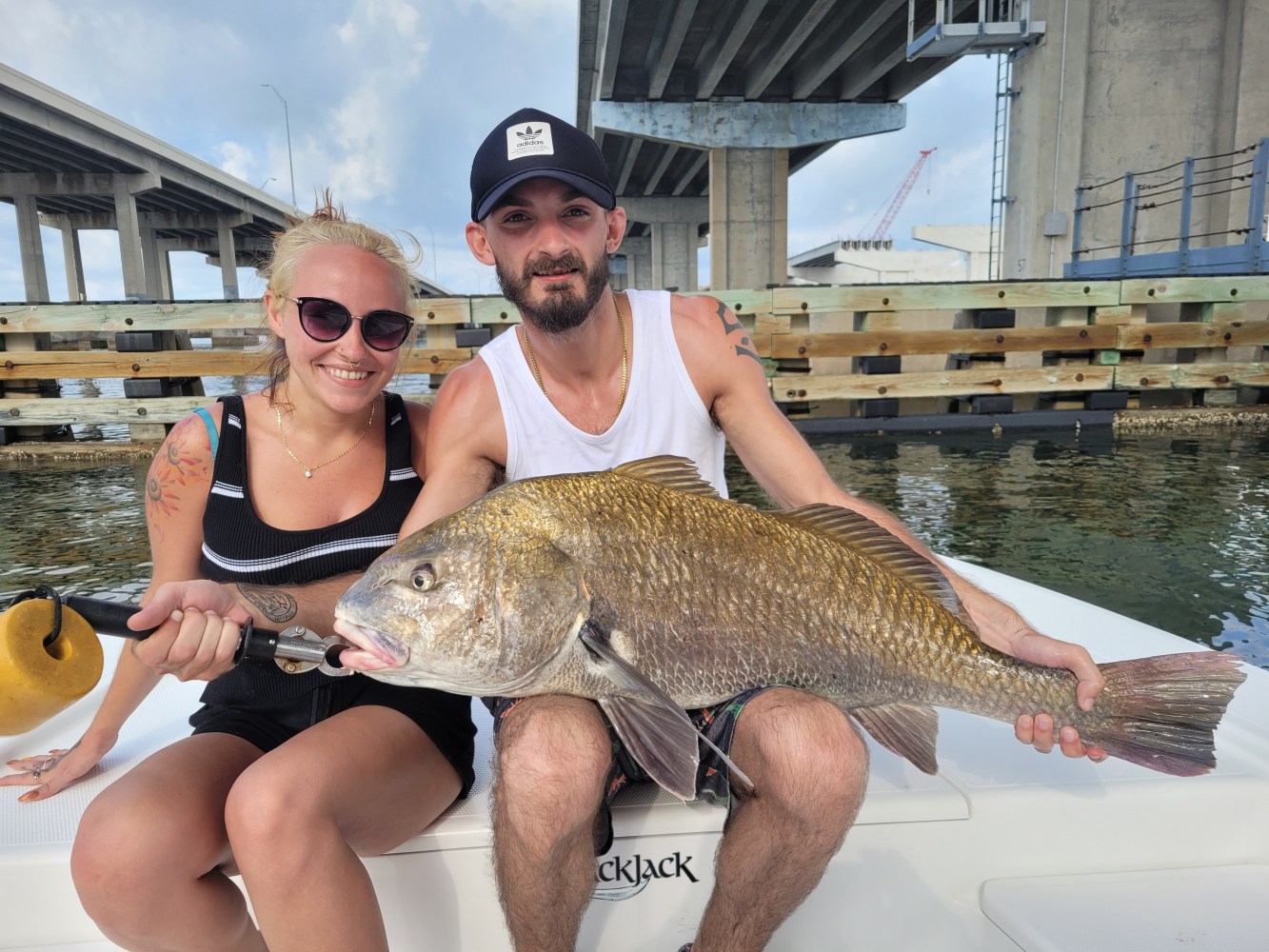
The Big Ugly! Black Drum Fishing is a fun filled fishing adventure. Nothing more like plucking a fish that weighs between 20 to 40lbs out of bridge structure to get that refrigerator mounted picture moment. These fish like to pull and they pull hard. When Black Drum Fishing the first part is to locate them. You can usually locate them on the surface of the water in schools like they do around Pinellas Point or even off Anclote Key area. However when they start to move inside up in our Tampa Bay Estuary they like to setup shop around the local bridges for the remaining of their stay until Fall time. You can normally scan the bridges such as Skyway Bridge, Bayway Bridge, Gandy Bridge, Howard Franklin Bridge, or even the Courtney Campbell Causeway Bridge. When scanning they screen will really light up because for this time of year they travel by the hundreds. They are a little bit tougher to fish for around the bridges, because they like to stage up way under the bridge pilings and normally you need something that smells to bring them out. That is why on our Tampa Bay Fishing Charters we use Blue Crab, Pass Crabs, and Shrimp to bring them out to eat. For our tackle we use our Tarpon setup which are classed as 30lb to 50lb line class and 8 foot extra heavy rod. You will also need to line up your setup with at least 50lb braid and 80lb fluorocarbon leader to avoid break offs under these bridge pilings.