Fishing tips and techniques : The change of the seasons
The change of the seasons
We have all heard the saying, “Different strokes for different folks”, right? This saying can be applied to fishing as well, as different techniques and locations must be acquired if your going to be successful on the water. It can be also tricky at times down here in Florida, because sometimes we remain warm, even during the winter months and this at times can make the fish think its spring time already due to uprising water temps that may occur. This is why it is important to take note of the water temp on your sonar whenever fishing a location. Fish will travel to certain areas of the bay during certain water temps and this can change your location all together that you had plan on fishing the day before.
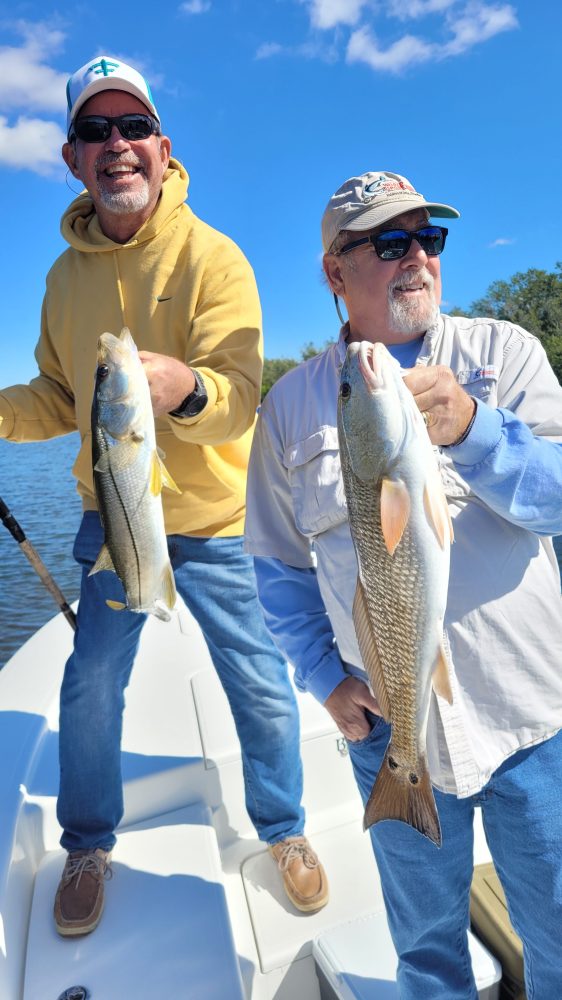
The species we normally target this time of year are Snook, Redfish, Speckled Sea Trout and Sheepshead. Each species will be targeted differently base up on the water temperatures that you read on your bottom machine.
Speckled sea trout will start to congregate in deeper waters, such as channels, creeks, or oyster beds located in deeper water. A good way to target this species is at times starting with an artificial bait with a weighted jig head. Find yourself a good deep hole to fish with moving water and keep jigging until you catch one. Once you have you have successfully caught one then keep fishing that hole, because that will be the spot the trout chose that day to sit comfortably in while ambushing baits. As the days keep getting shorter and the water temps keep dropping, other species such as the Sheepshead will start to invade our waterways. These tasty fish can be found laying around structures such as bridge pilings, docks, oyster beds, and also on sandy flats as they spawn.
The Sheepshead have a unique feature to them that everyone loves and that is their gorgeous smile. They are known to have the most gnarly looking teeth almost like human teeth but all messed up due to dieting on crabs, oysters, and shrimp. They prey on these baits around the barnacles, structures and flats. At times people bring a shovel or some type of tool to scrape the barnacles off the pilings of the bridges that green mussels and tiny crabs live in. When scraping the pilings your basically chumming the waters and releasing a scent that they are attracted too. One of the coveted species people to Tampa, Florida to target is the Snook.
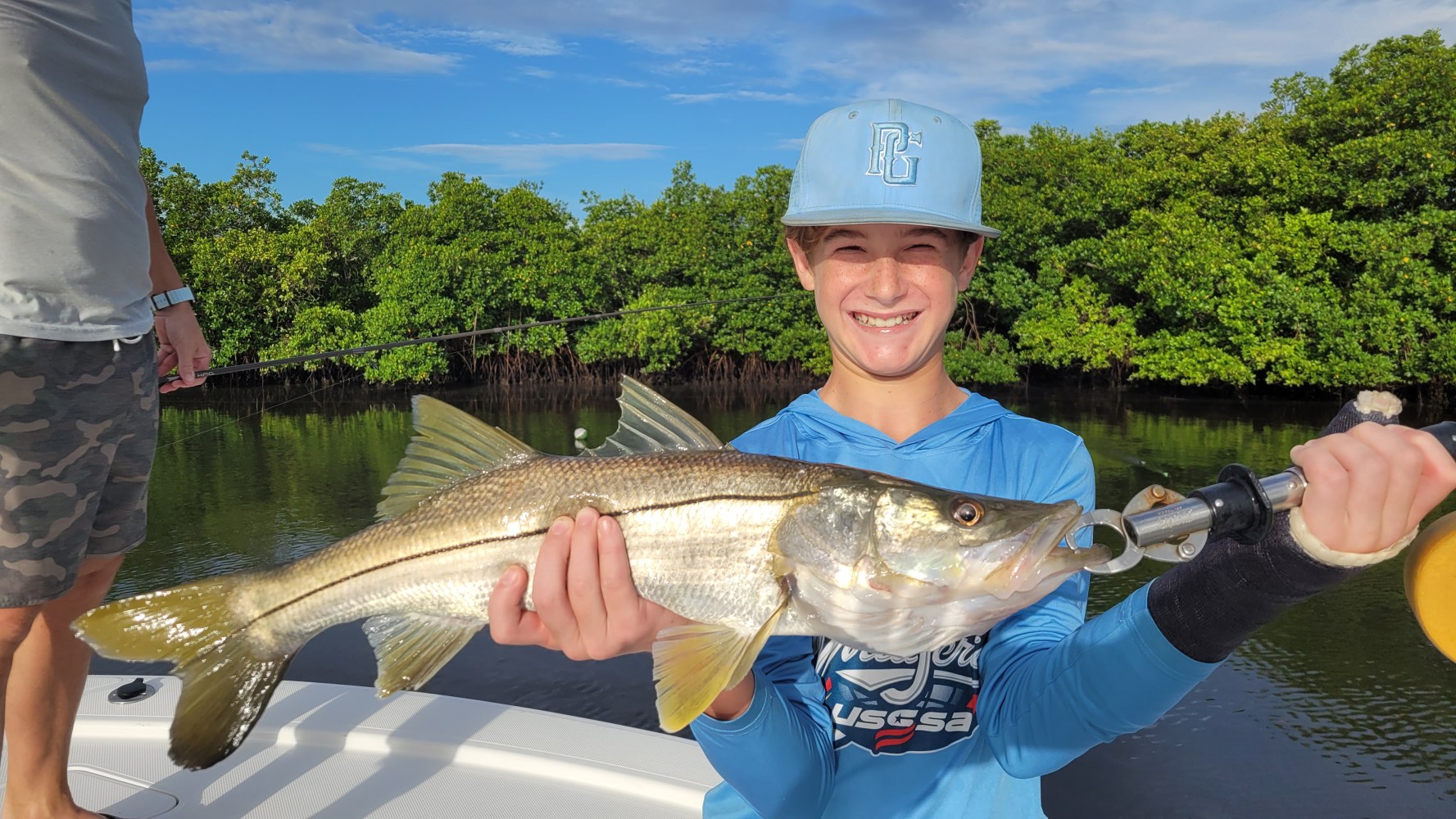
Snook are a great fighting fish and are also great table fare if prepared properly. Snook are a sub tropical fish whom like warm water and can be pretty tough to catch if water temperatures drop to low. To successfully target this fish, I will first start by looking at my bottom machine and read the water temperature. This will give me an idea on where to start my search in order to catch one. If water temperatures are in the low 70’s to high 60’s, I will begin my search in Creek mouths where deep water is found, along with a nice flow of water. The flow of water at times will warm up that section a little bit more than most areas you will find in Tampa Bay. Sometimes that extra 1 to 2 degree difference can make a world of difference when fishing for Snook as they like warmer water, especially during Winter time.
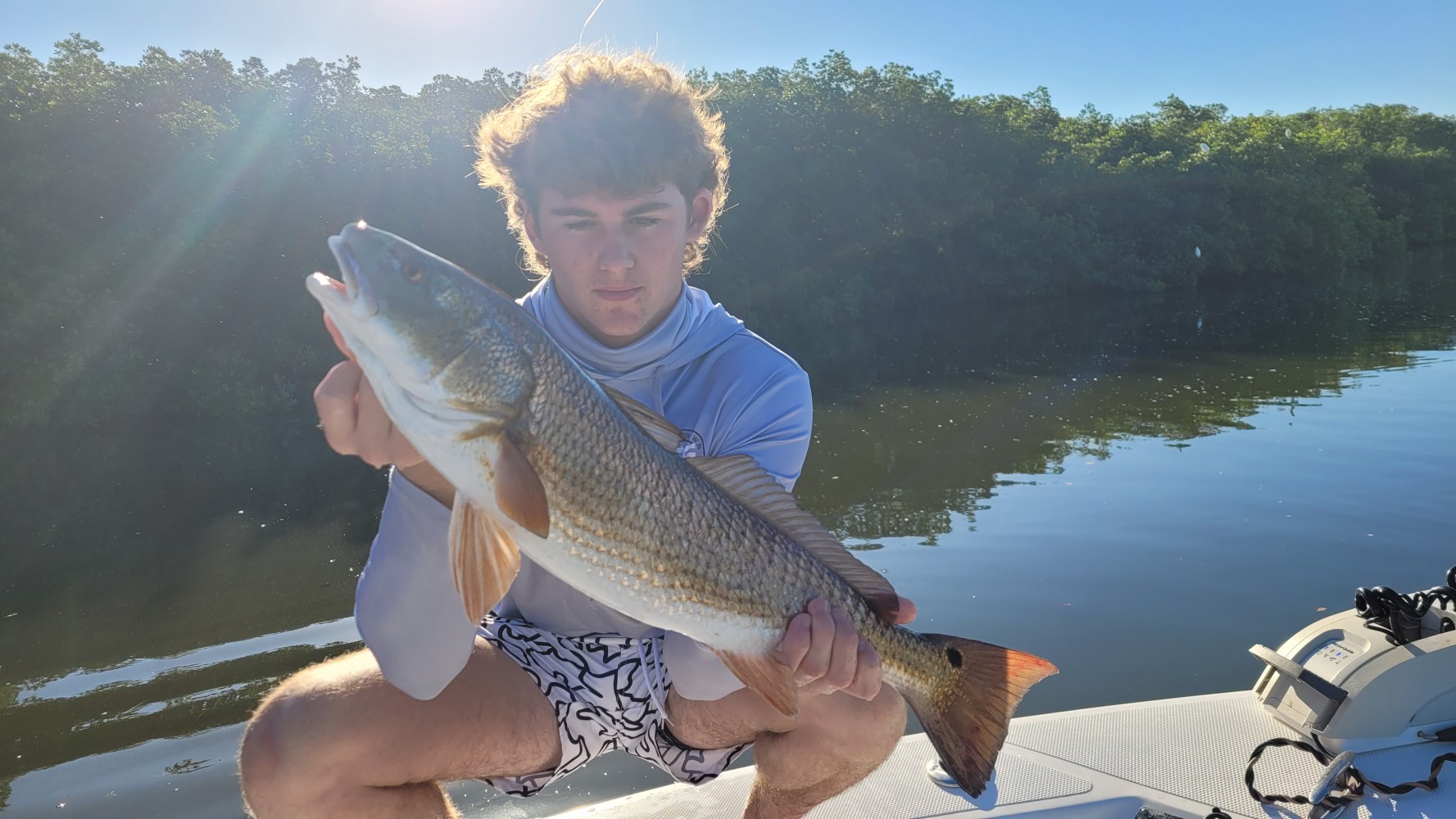
Redfish which is also a known targeted species we have in Tampa Bay, is another species that is fun to target. There are several ways you can target this flats stalkers which involve push poling a flat to get that sneaky approach to them. This will allow you to search a flat with good bottom quietly so you can swiftly make your cast ahead of the fish with your artificial bait and at times watch him stalk it until he comes to eat it. It is quite the adrenaline rush when this occurs because your seeing the whole catch from start to finish including the eat. Though this type of approach is for more of the experience anglers, Redfish can also be caught using cut bait and live bait. It is not uncommon to actually find the Tampa Bay Slam all in one hole in a creek. If using the cut bait approach you can stalk a flat until you see some type of activity, this can be birds, mullet, or anything that swims in that area showing there is a food source or life. Once you find a Redfish or spook one then its time to use cut bait and throw it as far as needed and wait patiently for him to smell it out. These technique is quite peaceful as your just patiently waiting for that rod to bend, while your enjoying being outside in mother nature. It is also a go to if Redfish are being picky that day, sometimes that cut smelly bait works better than a live bait swimming around since the fish does not have to chase it down. As the cooler months start to come and the water begins to drop, there is always some type of action you can get on to enjoy the outdoors. So as the Holidays approach, choose a Fishing technique that works for you during these upcoming colder months and go enjoy the outdoors as there is plenty of opportunities that await you. If you need a Tampa Bay Fishing Guide, we will be more than happy to get you and your family on the water and show you the beauty that our Bay offers by making memories. Tight Lines!
Snook
-
In the Tampa Bay region: Closed season December 1 through end of February, and May 1 through August 31.
-
Slot size: Not less than 28″ and not more than 33″ total length.
-
Bag limit: 1 fish per person per day.
-
Additional: A snook permit is required to keep one. ( When in Season)
Red Drum (Redfish)
-
In Gulf & Tampa region: Slot size 18″ minimum / 27″ maximum total length.
-
Bag limit: 1 fish per person per day, and 2 fish per vessel per day in that zone.
-
Season: Open year-round in that region.
Spotted Seatrout (Speckled Trout)
-
In the Tampa Bay (Gulf) region: Slot size 15″ minimum / 19″ maximum total length.
-
Bag limit: 3 fish per person per day in the Tampa Bay area.
-
Additional detail: May possess 1 fish over 19″ per vessel in certain zones.
-
Season: Open year-round in many Gulf state waters.
-
Sheepshead
-
Minimum size: 12″ total length.
-
Bag limit: 8 fish per person per day.
-
Season: Open year-round.
-
* Note: Regulations change all the time and it is best to always check the FWC website that shows all the up to date rules on harvesting anytime of species.